
What is a Possession Certificate: Meaning, Importance & Application Process in India
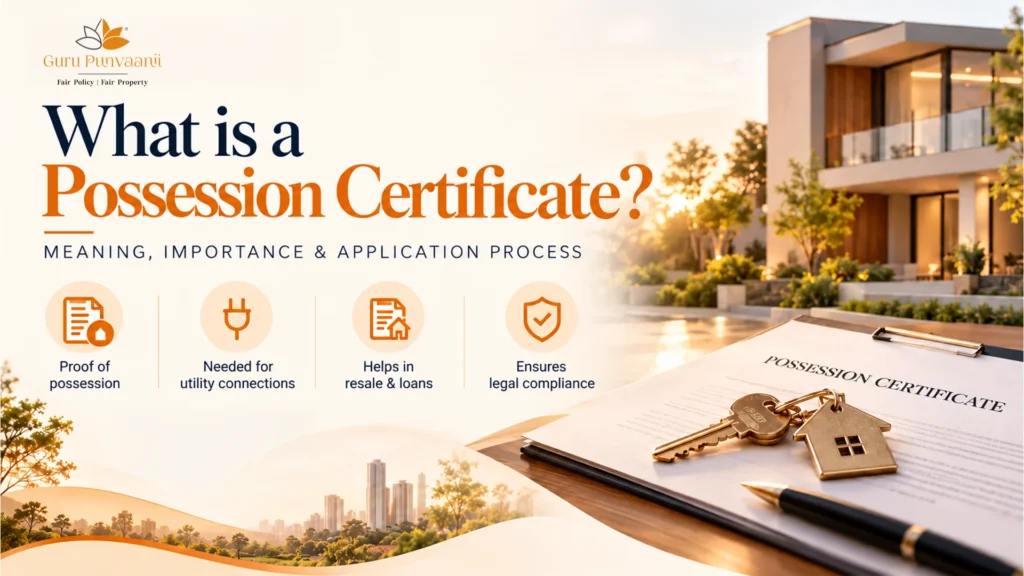
Getting the keys in hand once you reach the final stage of buying your dream home truly feels unreal. But here is a thing: Along with all that excitement. There’s also paperwork and one of the most important documents that you will hear about is the possession certificate. Now, before we get into anything else, let’s quickly understand what is possession certificate and everything you need to know about it!
- What is a Possession Certificate?
- Why is a Possession Certificate Important for Homebuyers?
- Types of Possession Certificates in India
- 1. Builder-Issued Possession Letter
- 2. Authority-Issued Possession Certificate
- 3. Conditional vs Final Possession
- 4. Documents Required to Get a Possession Certificate
- Step-by-Step Application Process for Possession Certificate
- Step 1: Construction Completion
- Step 2: Inspection
- Step 3: Submission of Documents
- Step 4: Approval
- Step 5: Issuance
- Final Thoughts
- Frequently Asked Questions
What is a Possession Certificate?
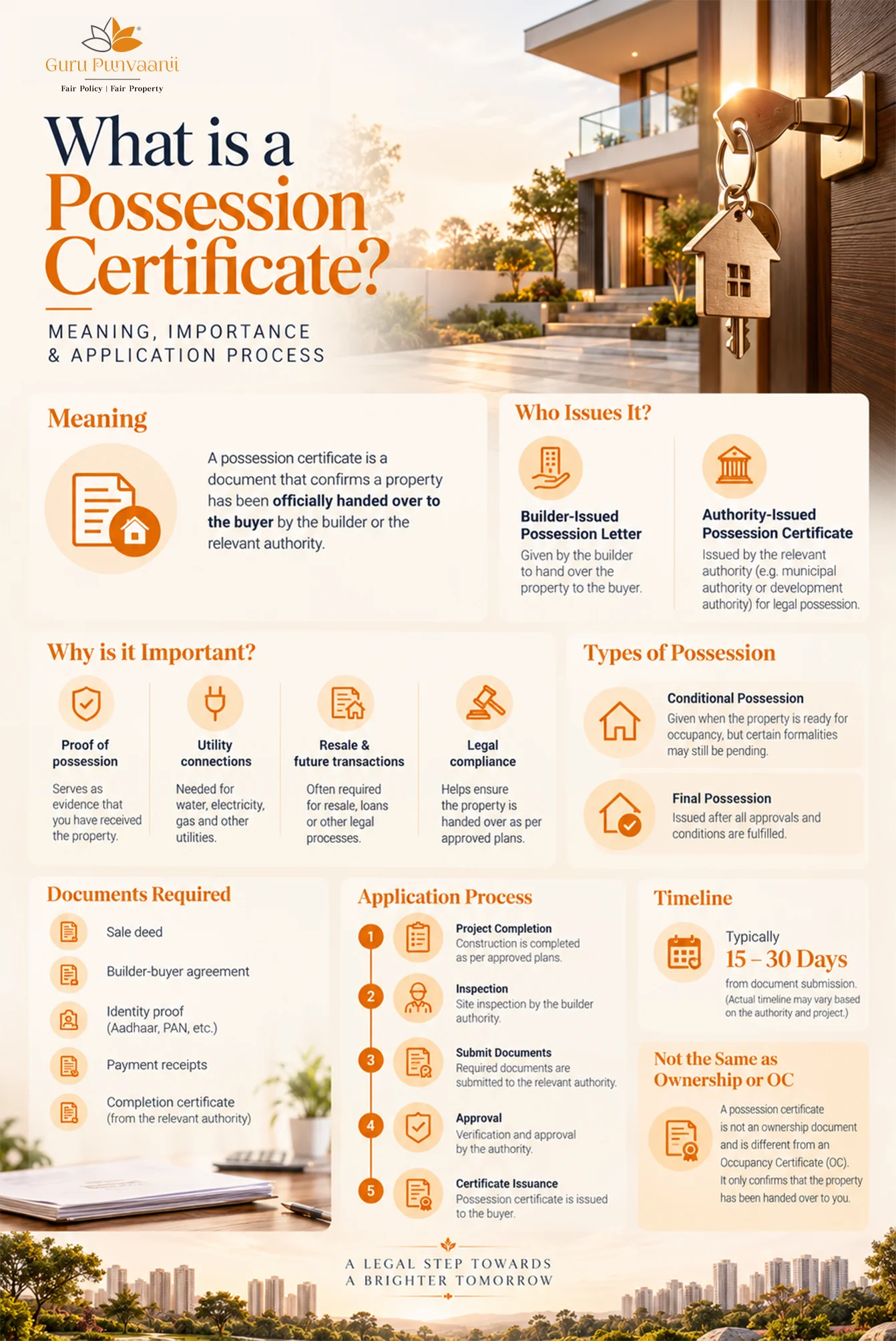
In simple words, a position certificate is basically an official document that is issued by the builder or the local authority. They confirm that you, as a buyer, have taken possession of the property. This document marks the moment when the property is physically handed over to you.
Now. You might also feel confused between possession and ownership, but they are not exactly the same. Ownership legally transfers during the registration, but possession is when you actually get access to the property and can start using it.
So now when you get confused about what the position certificate is, you can simply think of it as proof that the builder has completed the construction or at least your unit and is now handed over to you so you can use it.
Why is a Possession Certificate Important for Homebuyers?
When it comes to the position certificate. It is not just another document that you can file away and forget about. It actually plays a pretty important role in your home ownership journey.
Firstly, it acts as proof that now you are in control of the property. And well, without this document, there will be no official confirmation that it has been under your possession.
Secondly, you will also need this document if you are applying for utilities like electricity and water connections. In fact, many local authorities can ask for it as part of their documentation. So, if you don’t have it, you basically cannot apply for any such amenities.
Thirdly, if you ever even plan to sell your property, this document will be one of the biggest parts of your paperwork. Especially with the new buyers today who are cautious and don’t take chances, missing this one document can slow things down for you.
Types of Possession Certificates in India
1. Builder-Issued Possession Letter
This is usually the first document that you will receive when your home is ready for the handover. Basically, the builder will issue the possession letter telling you that the construction of your unit has been completed and now you can finally take the possession. But it does not necessarily confirm that all government approvals such as occupancy certificates are in place. That’s why even after receiving this, you should always verify before moving in.
2. Authority-Issued Possession Certificate
Now this is where it gets legally very serious, as this certificate is issued by the local municipal authority or the governing body. They only do it once they verify that property meets the required norms. It also confirms that the construction has happened as per the promised and approved plans, and it follows all the regulations. Unlike the builder issued letter, this document will add an extra layer of security for you as a buyer. So next time when you’re applying for utilities, resale, or legal verification, the authorities will recognize this letter as an official proof that you have the possession of the house.
3. Conditional vs Final Possession
Sometimes the builder might also offer you what’s called conditional or temporary position before all the approvals are fully secured. This means that you can move in, but certain legal clearances, such as the occupancy certificate, might still be pending. Final possession, on the other hand, is given only after all the approvals are in place and completed. If you ask us, then as a buyer it is always safer to wait for the final possession, unless there is a trusted developer in the market which you can rely on.
4. Documents Required to Get a Possession Certificate
Now let’s talk about another. Important of the art of the whole process, which is paperwork, because this is where people usually get stuck.
Here are the documents required for possession of certificates. Make sure you keep a note of them, so you never forget about them:
- Sale deed
- Builder buyer agreement
- ID proof. (Aadhaar card, pan card, etc.)
- Payment receipts
- Completion certificate
All these documents required for possession certificate are usually submitted by the builder. So, you don’t really have to worry about collecting them, but you should always keep copies of your own records. In fact. We always recommend our buyers to double check these documents before signing anything. Also, nowadays you can simply keep digital copies ready as well, as it will be much smoother, especially if you need them again.
Step-by-Step Application Process for Possession Certificate
Let’s break down the possession certificate application process in a way that actually makes sense.
Step 1: Construction Completion
The first step is for the builder to finish the construction and make sure that everything they promised to deliver is ready.
Step 2: Inspection
Now the local authorities will inspect the property to verify that everything is there is as promised by the developer and lives up to the standard of safety.
Step 3: Submission of Documents
Finally, all the documents required for possession certificate are submitted.
Step 4: Approval
Once that is done, the authorities will review everything and approve your request.
Step 5: Issuance
And as the last step is finished, the possession certificate gets issued in your name.
This is how the typical possession certificate applications flow like. Now realistically speaking, the timelines can vary and might not be the same for all. Ideally, it should take around 15-30 days, but delays are not uncommon if the approvals are pending for whatsoever reasons.
Now, if you are wondering how to apply for possession certificate, then well, in most cases, the builder will handle it for you. But as a smart buyer, you should always keep track of progress.
the possession certificate application process might sound easy on paper, but even small errors, missing documents, typos, can slow down the whole process by months!
Final Thoughts
A possession certificate might seem like just another document, but it is actually a key milestone in your home ownership journey. Which is why understanding what is possession certificate, knowing the documents required for possession certificates and learning how to apply for it can save you a lot of stress later.
If you look at our projects, we have made sure to bring transparency and security in every step you take. Especially with something as big as real estate, we don’t want you to take chances with your dream.
If you want to know more details about us, then you can contact us and maybe even visit our properties before you take your next big step.
Frequently Asked Questions
1. What is the difference between a possession certificate and an occupancy certificate?
On one hand, we have a position certificate, which means that the builder has handed over the property to you so you can step in, set things up and maybe even move in. On the other hand, occupancy certificate confirms that the building is legally safe to live in and follows all regulations. Understanding these documents is important when buying a home or investing in a property.
2. Why is a possession certificate important for property owners?
A possession certificate is basically an official document that says “okay, this property is now yours.” It basically confirms that the builder has handed over the property to you. Without this document, you will not have any proof of the occupancy, will not be able to get utility connections, and will face problems during resale and legal verification.
3. Why do I need a possession certificate for a home loan?
If you have taken a home loan, then the bank will usually ask you the proof that the property is actually yours. That’s where the certificate comes in to help you confirm your property has reached a certain stage has been handed over to you. And so, the loan will be tied to real property, not just something under construction. Buyers should also verify important property records and registration details through Kaveri online services before completing the purchase.
4. Who is eligible to apply for a possession certificate?
In most cases, the builder handles the whole application process, so you do not have to do much. Especially when you’re working with Guru Punvaanii, our team is there to guide you throughout the whole process.
5. How to apply for a possession certificate online?
The process is actually very simple as all you have to do is go to the municipal website to login, upload your documents, and submit the request. The best part? Now you can track everything online instead of constantly following up. If you are planning to invest in a property, explore our projects to find well-planned developments and suitable investment opportunities.