
How to Choose the Right Real Estate Investment Strategy
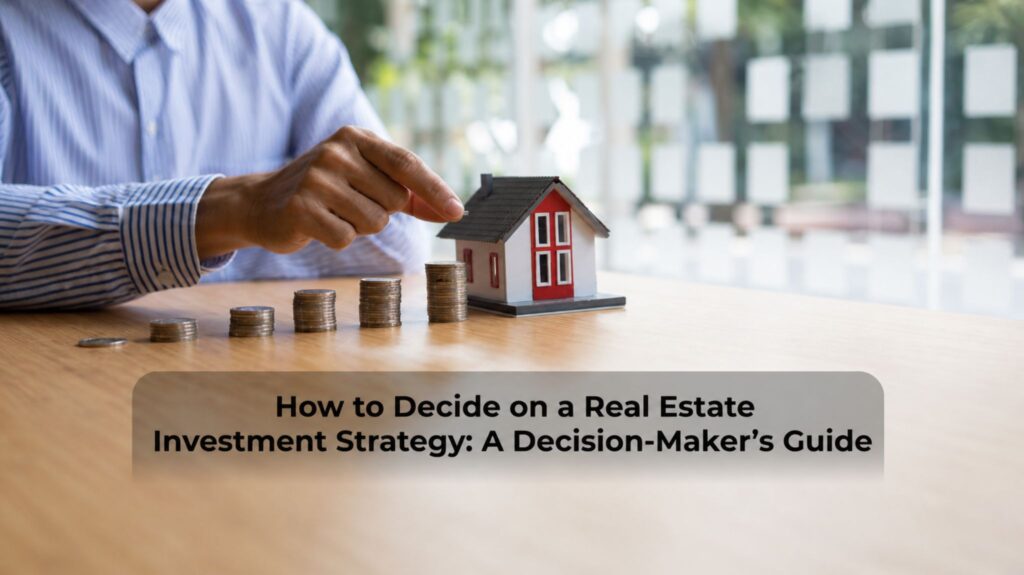
Investing in real estate is often seen as a way, and a surefire way, to build your wealth and secure your future. But as with investment, the success of it depends on making the right real estate investment strategy analysis decisions that are tailored to your goals, budget, and risk tolerance.
- Types of Real Estate Investment Strategies
- Buy and Hold
- Fix and Flip
- Rental Properties
- Real Estate Investment Trusts (REITs)
- Farmland Investing
- Crowdfunding and Emerging Strategies
- Real Estate Investment Strategies for Beginners
- How to Analyze Your Real Estate Investment Decisions
- The Best Real Estate Investment Strategy: Is There One?
- Investing in Farmland
- Making Your Decision: Step-by-Step Strategy Selection
In this market, there is not just one best real estate investment strategy but a variety to choose from. So, whether you want to go for rental estate properties or convert houses to farmland and REITs, you get to choose! But for beginners, that can be tricky. Which is why this guide will help break down the real estate investment strategies, analyze how to make smart decisions, and highlight what beginners should focus on.
Talking of goals, some of the common investor goals include:
- Generating passive rental income
- Achieving long-term property appreciation
- Flipping properties for quick profits
- Diversifying portfolio risk through real estate exposure
- Leveraging tax benefits like depreciation and 1031 exchanges
Types of Real Estate Investment Strategies
Now that you know the goals, it’s important to know that when in real estate investing, investing is not one-size-fits-all. Below are some main strategies and their core characteristics, advantages, and challenges:
Buy and Hold
As the name suggests, this strategy involves purchasing properties and holding them over time to benefit from appreciation and rental income. One is a favourite for investors who seek steady cash flow.
Pros: Long-term equity growth, steady income, tax benefits
Cons: requires property management, market fluctuations can impact value
Fix and Flip
With this strategy, investors buy properties that still need renovation and then improve them by putting in the work and finally sell quickly for a profit. This is a more active strategy demanding hands-on work and market timing.
Pros: Potential for quick profits, value addition
Cons: High risk if renovations go over budget or the market turns
Rental Properties
Owning rental properties is one of the most common real estate investments. In this one, residential properties like Elegance by Guru Punvaanii involve single-family homes. While commercial rentals cover office spaces, retail stores, or industrial units. This strategy is usually where most stability is, especially if bought at a good location.
Pros: Regular income, appreciation, tax deductions
Cons: Tenant management, vacancies, maintenance costs

Real Estate Investment Trusts (REITs)
REITs allow investors to buy shares in real estate portfolios without having to buy or own property. Yes! They are known for providing liquidity and diversification!
Pros: Pretty easy to invest, diversified, and passive income
Cons: The Market keeps changing, less control over properties
Farmland Investing
Now, coming to a less traditional but increasingly popular real estate investment strategy analysis decision, which involves buying farmland. It is popular among those who know agricultural land can provide steady returns through crop leasing or appreciation. In fact, this often comes with lower changes and rapid fluctuation than urban real estate.
Talking of which, managed farmland, Ekadanta by Guru Punvaanii is a notable player in the farmland investment space. This offers a space for investors to tap into a niche market with total transparency. If you are a beginner, then farmlands, and that too, such an elegant one, can be a smart long-term investment!
Pros: Inflation hedge, stable demand for food, diversification
Cons: Requires understanding of agriculture markets, less liquid
Crowdfunding and Emerging Strategies
With the rise of technology, crowdfunding platforms are now allowing people to pool money with other investors. Such real estate investment strategy analysis decisions can help to buy property shares while also lowering entry barriers further. This is a win-win for all parties, especially if you are a beginner and don’t want to put in a lot of money at the start.
Pros: Small minimum investment, access to larger projects
Cons: Platform risk, less liquidity
Real Estate Investment Strategies for Beginners
If you are new to real estate investing, the options can feel overwhelming. The key here is to start simple and with ways that require less capital and risk. This includes:
- Residential, like Elegance
- REITs
- Farmlands like Ekadanta by Guru Punvaanii can be a stable start.
How to Analyze Your Real Estate Investment Decisions
Now that you know the types of real estate investment strategies, choosing the right one also requires thoughtful analysis. Here are the key factors that you should keep in mind when making the big decision:
- Budget & financial resources include factoring in the down payments, maintenance, vacancies, and unexpected repairs.
- Then comes the risk tolerance. This is where you think whether you are comfortable with market fluctuations or the potential of losing money.
- Third is the time horizon, meaning how long you can hold your investment. For example, the long-term buy-and-hold strategies take their own sweet time.
- Location and market conditions also matter, and so you should research neighbourhoods, employment trends, infrastructure development, and rental demand.
Here are some tools for analysis that can help you make a better decision:
- Return On Investment (ROI)
- Cap Rate
- Cash Flow
- Market Comparisons

The Best Real Estate Investment Strategy: Is There One?
Now in the race of real estate investment strategy analysis decisions, it’s not possible to crack every strategy and be able to make a profit from all of them. And so, there is no single “best” strategy that fits all investors. It all depends on your:
- Financial situation
- Risk tolerance
- Time commitment
- Market knowledge
- Long-term objective
For example:
- A retiree looking for passive income might favour REITs or buy-and-hold rentals.
- A younger investor with time and appetite for work might pursue flipping or crowdfunding projects.
- Someone seeking diversification and inflation protection could explore farmland.
Investing in Farmland
Farmland investing in a trusted name like Ekadanta by Guru Punvaanii holds great potential, and here is why this can be the best real estate investment strategy:
- It’s a stable and timeless demand, as food is a basic necessity, so farmlands are less sensitive to economic trends.
- Agricultural land tends to appreciate with inflation, so you are in for a win.
- Farmlands behave differently from urban real estate and stocks, so they will diversify your portfolio!
Top real estate investment strategies for beginners include:
- Research the agricultural cycle and commodity prices.
- Understand water availability and soil quality.
- Choose platforms or partners with a strong track record.
Making Your Decision: Step-by-Step Strategy Selection
Step 1: Define Your Investment Goals
If it helps, write down your financial goals. Whether or not you want a monthly income? Capital growth? Tax benefits?
These things will help to shape your strategy.
Step 2: Evaluate Your Resources
In this step, you assess your capital, credit, and the amount of time you can devote to the whole real estate process. Especially when starting, it can take time to learn the trends.
Step 3: Research Markets and Strategies
This is a non-negotiable! You should study local real estate trends and various investment approaches. For this, you can use tools like ROI calculators and market reports.
Step 4: Test the Waters
Put your best foot forward and start small, but start! Maybe you can invest in a REIT or buy a single rental property or start with Ekadanta Farmlands. Unless you test the waters, you will not be able to scale profitably.
Step 5: Seek Expert Advice
Last but not least, you should not shy away from consulting a real estate agent, financial advisors, or an investment platform. It’s because their experience can provide you with personalized insights and help you make a less risky start! Contact us for more details.