
Why Rent Agreement Created Only for 11 months

One of the most common questions that people have in mind is “Why a rent agreement for 11 months?” Trust me, even though I wondered about the same. Only after deep research did I finally find the real reason behind this specific period. So, without further delay, let’s get into the topic.
What is a Rental Agreement?
Rent agreements, also known as lease agreements, are legal contracts between a landlord and a tenant that outline the terms and conditions of a rental property. Now, let us look into the laws and regulations in India that govern this rental agreement.
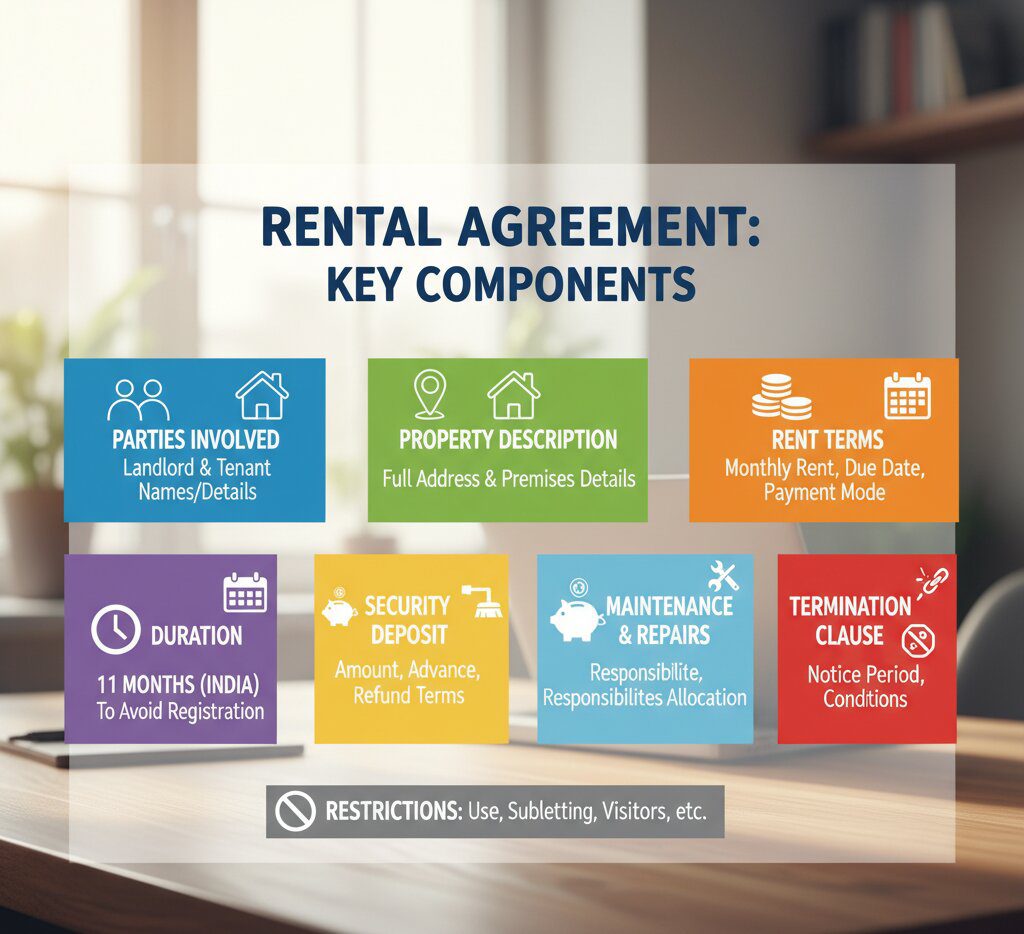
Key Components of a Rental Agreement:
- Parties Involved: Names and details of the landlord and tenant.
- Property Description: Full address and details of the rented premises.
- Rent Terms: Monthly rent, due date and mode of payment.
- Duration: Commonly 11-month rent agreement in India to avoid mandatory registration.
- Security Deposit: Amount taken in advance and refund terms.
- Maintenance and Repairs: Who handles what responsibilities?
- Termination Clause: Notice period and conditions for ending the agreement.
- Restrictions: Use of property, subletting, visitors, etc.
Indian Rent Control Act
The Indian Rent Control Act is a set of laws and regulations enforced by both central and state governments to safeguard the rights of both owners and tenants. These ensure the credibility of rental agreements, preventing either party from exploiting the other.

Benefits for Tenants
As per the Registration Act of 1908 under Section 17(d), if a rental agreement is below 12 months, tenants can avoid the tedious process of registering the agreement at the sub-registrar office. This saves time and money on stamp duty while moving into a new rental property. Such provisions make 11-month rent agreement rules highly practical for tenants.
Benefits for Owners
For landlords, the 11-month agreement allows them to revise rent or evict tenants after the term without lengthy legal procedures, as outlined in the Rent Control Act. This flexibility helps landlords adjust rents in line with inflation or market demand, enabling them to cover rising expenses or improve the property as needed. In conclusion, the 11-month rental agreement preserves the rights of both landlords and tenants while simplifying the process. That’s why most rental contracts in India are framed for 11 months.
Conclusion
For years, the 11-month rental agreement has been the go-to choice for tenants and landlords alike. It avoids registration hassles, saves stamp duty, and offers flexibility. But while renting provides a short-term solution, it rarely delivers long-term value or security.
At Guru Punvaanii property, we invite you to consider a smarter alternative, owning your dream villa in a fast-growing suburb of Bengaluru. Contact us for more details.