Gurupunvaanii

Legal & Documentation

Documents to Inspect Before Buying a Property
Legal & Documentation

Essential Documents to Inspect Before Buying a Property in India 

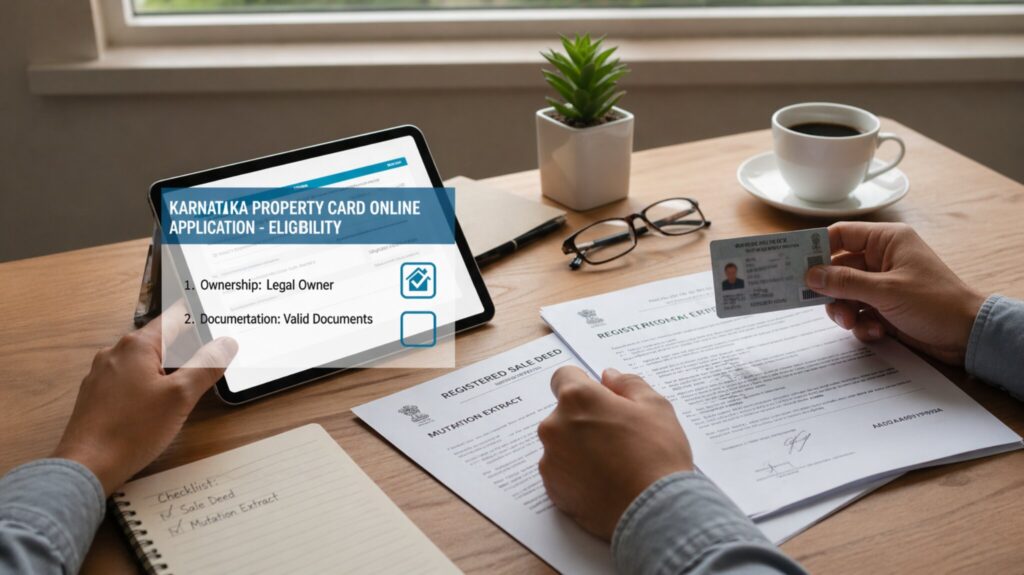
Buying property demands certain documents from the purchaser to the seller for a smooth and legal transaction. This covers proofs of identity to property-related documents like surveys and title deeds, amongst others; thus, knowledge of the requirements for documents is quite necessary.  Table of Content Understand Property Documents List of Essential Documents for Buying a Property in India Sale Deed Encumbrance Certificate  Possession Letter  Khata Certificate  Title Deed  Building Approval Plan  Power of Attorney (POA)  Completion Certificate  Occupancy Certificate  No Objection Certificates (NOCs)  Sale and Purchase Agreements  Payment Receipts (Under Construction / Ready to Move)  Identity and Address Proof  Mortgage Documents (if applicable)  Compliance under RERA (Regulation and Development) Act, 2016  Required Documents  For Under-Construction Property  For Ready-to-Move Property  Fresh  Primary Sale  Resale / Secondary Sale  Primary Sale  Resale / Secondary Sale  Complete Checklist for Legal Documents Required for Purchase of Property Final Thoughts on Legal Property Documents FAQ’s Understanding Property Documents Purchasing property is a once-in-a-lifetime activity, and it also means a long-term commitment to the financial plan and an investment for the long term. Be it a first-time buyer or a seasoned investor, understanding the documents involved in a process of buying property is very necessary. For this, one needs to have knowledge about the main points to avoid any hassle. Legal considerations include ascertaining whether the property is fully owned by the owner and that the owner’s title to the property is unencumbered, free from any form of encumbrance, or disputed. On the buyer’s side, it will involve meticulous planning, assessment, due diligence measures, and arranging funds for a purchase.  As pre-launch projects in Bangalore attract investors, especially when it comes to new construction projects, it becomes important to understand the need for proper documentation. This is most desirable for passionate investors looking specifically for luxury apartments in Bangalore, a sector that is commonly accepted and sought after. If you are an investor and want to invest by offering a down payment, then these pre-launch projects in Bangalore will offer long-term returns. However, do not hesitate to read all necessary documents before making a decision. Due to the fantastic job market and infrastructure, apartments in Bangalore are some of the most wanted properties.  Key Property Purchase Documents in India When it comes to buying property in India, several legal documents hold importance. These documents not only ensure adherence to the law but also serve as proof of ownership and facilitate a transaction. All thanks to the high-quality apartments in Bangalore, which are quickly gaining popularity among first-time buyers, the need for proper documents is being understood. Second-time buyers who have started dreaming of exclusive villa projects in Bangalore know a bit about the documentation process.  So, whether you’re purchasing a house, a plot of land, or a commercial property, it’s essential to familiarize yourself with the property documents required for the process. 1. Sale Deed A deed is a paper that acts as evidence of a transaction. It legally confirms ownership and transfers the property title from the seller to the buyer. Usually, it is signed after reaching a deal and fulfilling the terms and conditions. This document holds importance for individuals buying a home for the first time. It contains details about the property like its description, location, boundaries, and purchase price. To ensure its legality, it should be recorded with a sub-registrar. This is often required when a buyer seeks a loan from a bank. When preparing this document people can get help from the authority. Here are features of a sale deed that should be checked when acquiring property –   The sale deed needs to be registered within months from the date of signing.   It must be registered at the sub-registrar office.   It can serve as an important document for future property transactions.   It acts as proof of property ownership.  A sale deed becomes void if not registered within the timeframe. 2. Encumbrance Certificate This paper proves ownership, showing that there are no pending legal or financial responsibilities tied to the property. It comes from the sub-registrar’s office and usually covers a period of up to three decades. The EC is involved in ensuring that the property is free from any burdens such as mortgages, loans, or legal problems.  3. Khata Certificate This document is used to confirm details about a property like where it is located, how big it is, and its measurements all for tax purposes. The Khata Certificate helps verify the owner’s identity when it comes to paying taxes. It’s also important for getting utility services like electricity and water. Moreover, you need a Khata certificate to register a property or transfer ownership of an existing one. 4. Title Deed It determines the owner of the real estate and maintains a log of its past ownership. Before making a purchase, the buyer should review the title deed to confirm that everything is in order and that the property can be sold or transferred without any complications. 5. Building Approval Plan This paper is essential during the construction of a property, as it is issued by the local authorities or municipality to ensure that the building process adheres to the approved design and construction standards. The building approval plan verifies that the property construction is legal and complies with regulations. 6. Power of Attorney (POA) When purchasing a property through an agent or representative, it’s essential to have a specific document in place. This document grants the individual the power to act on behalf of the buyer or seller regarding aspects of the property deal. 7. Completion Certificate The local development authority grants this approval once they inspect the property to ensure that it aligns with the approved plans, adheres to safety standards and complies with building regulations. This step is essential for securing utility connections and obtaining an occupancy certificate. 8. Occupancy Certificate The occupancy certificate OC is issued by the local government after a building is completed. It is crucial to acquire the OC in order to get loans for a home and to get permission to rent or use the property for business purposes. The OC acts as evidence that the property is ready for occupancy. 9. No Objection Certificates (NOCs) The exact

A Khata vs B Khata
Legal & Documentation

What is the Difference Between A Khata and B Khata Properties

Knowing what Khata means is essential when purchasing real estate in Bangalore or any other part of Karnataka. Having a proper understanding of both A and B khata is essential, as it helps you avoid legal issues and financial losses, regardless of your level of experience as an investor or first-time buyer. We have mentioned the essential details of A khata and B khata along with their differences. Also, you will get to know the risk of buying these and how to turn B Khata into A Khata. So, continue reading to get complete details of it.   What is Khata? A Khata is an official document issued by local municipal authorities or the Bruhat Bengaluru Mahanagara Palike (BBMP). For the purpose of assessing property taxes, it keeps track of information about a property. A Khata includes:  Name of the owner  Dimensions of the property  Location and ID of the property  Paid or owed taxes  A Khata, basically, is evidence that a property is in the municipal records. It is necessary for:  Putting in applications for construction permits  Obtaining connections for water and electricity  Getting the property sold  Making use of loans  Two Primary Varieties Are a Khata and B Khata What is A Khata & Its Benefits: According to Khata, property  Complies with all laws and rules issued by the government.  Possesses all necessary BBMP or relevant governmental approvals  Has made all required payments, including taxes and improvement fees.  Benefits of A Khata: Qualified for bank and financial institution house loans  Able to obtain approval for building plans  Lawfully acceptable for building, sale, or transfer  No problems obtaining municipal connections or trade permits  Complete legal conformity is A Khata. It provides a “clean chit” to the property.  What is B Khata and What Are its benefits? B Khata was established by the BBMP for properties that do not fully comply with the law under a different register known as the “B Register.” These:  May be constructed without the required permits on revenue land.  Possible infractions of the building plan  It might not have been converted from agricultural to non-agricultural usage, or it might contain outstanding debts.  Benefits of B Khata Property BBMP views it as either semi-legal or illegal.  Unable to acquire trade or building licenses  Loans from nationalized banks are not available to you.  Legally difficult to sell or transfer  Increased likelihood of legal disputes  As a result, even though B Khata houses are frequently less expensive, there are financial and legal dangers involved.  Key Difference of A Khata & B Khata Features  A Khata  B Khata  Legal status  Fully legal  Legal  License eligibility  Yes  No  Bank loan eligibility  Yes  No  Resale/Transfer  Easy  Difficult  Tax compliance  Paid  Partial  Betterment charges  Paid  Nonpaid  11A Khata and 11B khata 11A and 11B Khatas relate to properties under Gram Panchayat (not BBMP).  11A Khata Issued for properties that have all necessary paperwork  Recognized by law  Qualified for building permits and plans  11B Khata For properties that are contested or need full approvals  Not qualified for building permits or loans  Regarded as dangerous for purchasers  To determine the legal validity of a document issued by a Panchayat, always confirm if it is 11A or 11B.  How to Convert a B Khata to A Khata? For resale and legal clarity, many property owners want to change B Khata to A Khata. Here’s how: Qualifications Conditions  Pay off all of your unpaid property taxes.  Assure DC conversion (land used for agriculture to land used for non-agriculture).  Pay the betterment charges, which are the costs associated with bringing the land under BBMP control.  Methodical Procedure Go to Sakala Services Portal.  Choose the Khata transfer or registration service after registering.  Upload the necessary files: Deed of sale, Certificate of encumbrance, Receipts for taxes paid, Certificate of conversion, Approval of the building plan (if available), Pay the relevant fee.  Make use of your Sakala number to track the application. Obtain your A Khata certificate from BBMP after approval.  Is Purchasing B Khata Real Estate in Bangalore Safe? Risk of purchasing real estate in B Khata:  Not permitted by law to be built or sold  Unable to obtain bank loans  Conversion to A Khata in the future is not assured.  At risk of being demolished if the government starts regularization campaigns  When is it considered? Because of the affordable rates and advantageous location, some purchasers choose B Khata. However, you should only make such transactions after speaking with a legal professional.  Verify whether DC conversion is feasible.  Determine whether the costs of improvement can be covered.  Inquire about the possibility of regularization under the Akrama-Sakrama system, if any.  Always confirm legal documentation and prospective convertibility before purchasing a B Khata property. Also Read: How to Check RERA-Registered Projects in Bangalore   Conclusion Knowing the distinction between A and B Khata might make or break your Bangalore real estate choice. B Khata properties have limitations and hazards, but A Khata homes are legally safe. Make sure to conduct extensive legal due research if you’re thinking about buying a B Khata property because of financial limitations. To guarantee future security and compliance, look into the possibility of changing it to A Khata. At Guru Punvaanii, we simplify the complex legal aspects of property buying, whether you’re considering an A Khata or exploring the risks of a B Khata. Our team ensures that every plot or villa is thoroughly verified, legally compliant, and future-ready. Contact us for more details.

What is an Encumbrance Certificate
Legal & Documentation

What Is an Encumbrance Certificate (EC) & Why It’s Important

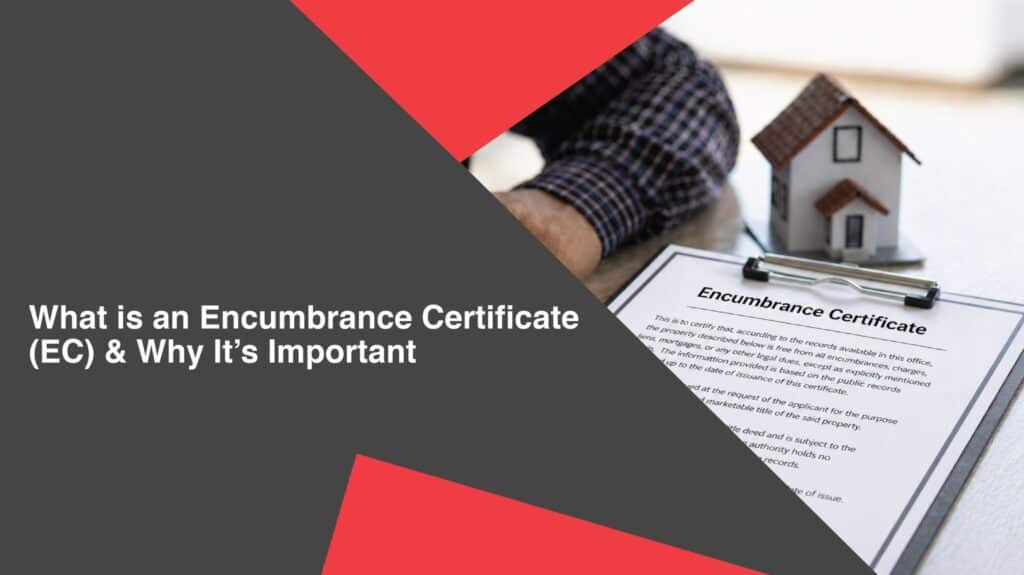
When you decide to buy a plot of land, you’re not just buying soil and boundaries. You’re investing in a dream, your home, your family’s future, or a long‑term investment that grows with time. But here is something every wise investor checks before signing on the dotted line: the Encumbrance Certificate, often called an EC.   So, in this article, let’s go step by step and understand everything you need to know about an EC, from what an EC is in property to how to get an encumbrance certificate in Karnataka.  First Things First: What is an EC (Encumbrance Certificate) in Property? Let’s start with the basics!  An EC is short for Encumbrance Certificate, which is an official government record that shows whether a property is free from any legal or financial baggage. So basically, when you buy a plot, you want to be sure that:  No bank has a mortgage on it.  There is no pending loan attached to it.  There is a legal case or claim by someone else.  And that clean record is exactly what an EC proves! If we explain what is EC in property in simple words, then it is your property’s history sheet. If the EC is clean, it means the property is free from encumbrances and safe to buy.  Here, at Guru Punvaanii, we don’t just expect you to take our word for it! Instead, our focus is to help you see the EC yourself. That’s how confident we are about the transparency of our projects!  Why Is an EC So Important? Imagine this: you buy a beautiful plot, start building your dream villa, and a year later, a bank sends you a notice saying the land is mortgaged by someone else. Nightmares, right? This is exactly what an EC saves you from!  An EC protects you from such surprises. So, no, it is not just a piece of paper but a safety net that: Confirms legal ownership.  Shows the transaction history, whether it is sales, mortgages, or leases, if there are any.  Gives you the green signal to proceed with peace of mind.  For all our projects, we proudly provide a clear EC so that you know the land you’re buying is as clean as it can get. So, if someone asks you what is EC in property and why it is important, what would you say? You know now that it is your proof that you are investing in something that is secure and does not come with nightmares disguised as surprises.   How to get EC Before Buying a Plot Now that you know what it is, it’s time we talk about how to check EC. Because you see, gone are the days when you had to spend hours in government offices. Here is how you can check EC quickly with literally 5 steps:  Step 1: Visit the Kaveri Online Services portal, which is your state’s official site for property documents.  Step 2: Enter the property details, including the survey number, site number, or document number.  Step 3: Choose the period, which can usually be 12-30 years, to get a full history.  Step 4: Pay a small fee online if needed or asked for.  Step 5: Download the EC instantly in the format of a PDF, which you can then access easily.  Application for Encumbrance Certificate (EC) Now, some people also seek an official hard copy of the EC. For this, you can make an application for an encumbrance certificate at the Sub‑Registrar’s Office (SRO). Here is what you do:  Fill out Form 22, which is available at the SRO or online.  Mention the property details like boundaries, previous owner names, etc.  Attach your identity proof and property documents.  Pay the required fee (usually minimal).  Submit the application and wait a few days.  Once that is processed, the SRO will issue your EC. In fact, many people choose to make an application for an encumbrance certificate even though they are provided with copies. Why? Well, it is because it’s always good to have your record on the safer side, especially if you are not going for a trusted name.   How to Get an Encumbrance Certificate (EC) in Karnataka (Step by Step) If you live in Karnataka, you would be glad to know that the process is more or less the same. But if you are still wondering how to get an encumbrance certificate in Karnataka, Here’s the process in detail:  Step 1: Go Online or Offline  Online: Visit Kaveri Online Services  Offline: Visit the local sub‑registrar’s office where the property is registered.  Step 2: Enter Details  District, taluk, village, survey number, or site number.  Step 3: Select the Duration  Most people choose 10–30 years to cover all past transactions.  Step 4: Pay the Fee  Online payments are accepted through net banking or UPI.  Step 5: Download or Collect  Online applications give you a downloadable EC within minutes.  Offline applications issue a printed certificate after verification.  That’s how simple it is to get an encumbrance certificate in Karnataka today. And if at any point you feel stuck, our team at Guru Punvaanii will gladly help, because we believe an informed buyer is a happy buyer. How to Check Certificate of Encumbrance on Property Once you have EC in your hand as a hard copy or in your phone as a PDF, don’t just file it away. It is also important to know how to check the certificate of encumbrance on property carefully.  So, when checking, make sure you are looking at these details:  Property Owner’s Name: Does it match the seller’s name?  Transaction List: Any sale deeds, mortgages, or leases will be listed.  Encumbrances: If there’s a loan or court order, it will be shown here.  If you sense or pick up anything that does not make sense, then stop the process and ask questions, and even write them down to check later if you have to. At Guru Punvaanii, we encourage every buyer to learn how to check the certificate of encumbrance on property. After all, no one likes hidden surprises later!  Conclusion Buying land is one of the biggest decisions you’ll make. It’s not just about finding a beautiful plot. It is also about making sure your investment

Legal & Documentation

Kaveri Online Services Portal: A Complete Guide

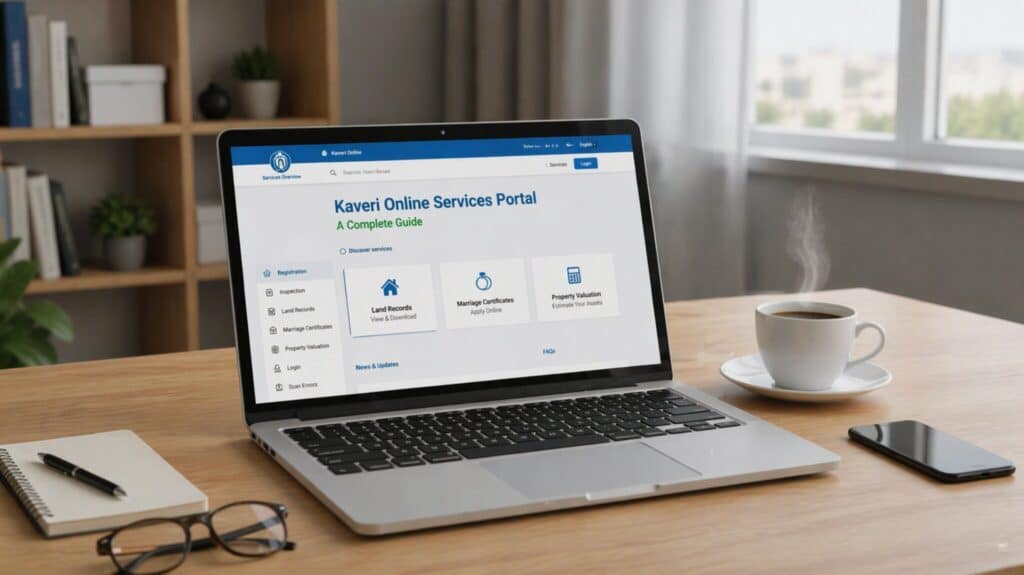
The real estate and property industry in India has long been synonymous with cumbersome paperwork, repeat visits to offices, and endless waiting. One of the fastest-growing states in India with high urbanization, Karnataka felt an urgent need to make these processes simpler and more digitized. To meet this, the Government of Karnataka launched the B, which has revolutionized the manner in which citizens access land and property services. This online project has accelerated property deals, made them more secure and more transparent. No longer do buyers, sellers, lawyers, and banks have to dash from one government office to another. Now, they can complete most processes online. From verifying ownership to downloading an Encumbrance Certificate (EC) or computing stamp duty, all this can be done in a few mouse clicks.  Why Digital Property Services Matter The digitization of land records and property transactions in Karnataka has provided several advantages. First, the repetitive office visits are avoided, and citizens have access to services at home. Second, transactions become much faster due to digital authentication of documents like ECs and ownership records. Third and above all, these online systems provide legally safe, traceable records, which minimize the danger of fraud and documentation mistakes. By moving property-related services to the online platform, the Karnataka government has enhanced efficiency and made the system more citizen-centric.   The Kaveri online services concept is now increasingly being used by home buyers, property developers, and even banks, which depend on accurate records for lending purposes.  What is the Kaveri Online Services Portal? Kaveri online services portal is a flagship digital project of the Department of Stamps and Registration, Government of Karnataka. It is a single window for the convergence of various property-based services.  The citizens can view land records, apply for an Encumbrance Certificate (EC) or Certified Copy (CC), compute property valuation, pay stamp duty, create e-stamps, and even schedule appointments for the registration of property.  In essence, the portal serves as a connector between administrative offices and people, making sure there is more transparency and less reliance on intermediaries.  Major Services Provided on Kaveri Portal The Kaveri portal for online services delivers an extensive range of functionalities that make property deals simple and trustworthy:  Property Registration: Provide information online, compute charges, pay, and schedule an appointment in the Sub-Registrar’s Office (SRO).  Encumbrance Certificate (EC): Submit application, pay online, and obtain a digitally signed EC.  Certified Copy (CC): Get certified copies of registered documents online.  Stamp Duty & Registration Fee Calculator: Pre-estimate charges prior to transacting.  Online Property Valuation: View guideline and market values by location and property type.  E-stamping Services: Pay stamp duty online and create an e-stamp certificate or challan.  Marriage Registration: Start registration online and schedule an appointment.  Document Verification: Verify the genuineness of registered documents on the internet.  The broad range of services makes sure that the portal provides solutions to nearly every property-related requirement.  Registering on the Kaveri Portal Citizens must register in order to avail the services. The registration process is easy, but if you still find any difficulty, then visit Guru Punvaanii, they will help you with every step:  Go to the official Kaveri online services platform.  Click on “Register” and enter your personal information like name, mobile number, email, and address.  Create a password and fill in the form.  Authenticate your mobile and email with OTPs.  After verification, your account is activated, and you can log in to avail the services.  Issuing an Encumbrance Certificate (EC) Online The Encumbrance Certificate is perhaps the most significant document in property dealings. It establishes if the property is free of all financial and legal liabilities. Through the Kaveri online services, you can apply for it online: Log in to the portal.  Choose “Encumbrance Certificate” from the menu.  Provide details like district, village, survey/site number, and the desired time period.  Submit the application, pay online, and check the status.  After processing, download the digitally signed EC.  It eliminates delays and makes important legal information easily accessible.  Property Registration through Kaveri Online Services Registration of property, which was earlier a multi-visit procedure, is now made easy through the Kaveri online services portal. The procedure involves:  Logging in and opening the PRDE (Pre-Registration Data Entry) module.  Filling in information regarding the document, property, parties, and witnesses.  Uploading supporting documents and calculating valuation.  Payment of stamp duty and registration charges online.  Fixing an appointment at the SRO.  Making a visit to the SRO with original documents and witnesses for final registration.  This online + offline visit for final approval hybrid model maintains legal authenticity while being convenient.   Online Verification of Land and Property Documents Another handy functionality of the Kaveri online services platform is document verification. Users can login and search for ECs by property or party name and confirm registered document details. This is an important step for due diligence prior to purchasing a property.  It is recommended to cross-verify these records with title deeds, property tax receipts, and approved building plans. Professional legal counsel may still be needed for large transactions, but the portal provides a good starting point for verification.  Calculating Stamp Duty & Registration Fees Property buyers often struggle to understand how much they need to pay in stamp duty and registration fees. The Kaveri online services portal simplifies this with its calculator tool.  By selecting the nature of the document, entering property location, and filling in market value or consideration amount, users can get an instant calculation of charges. This transparency helps buyers plan finances in advance and avoid last-minute surprises.  Using E-stamping Services Buying stamp papers used to be associated with delays and counterfeit document risks. The Kaveri e-stamping solution has eradicated this issue.  Log in and select the e-stamping facility.  Put in transaction details, confirm information, and pay online.  Download the e-stamp certificate or challan for reference.  This makes stamp duty payments safe, traceable, and tamper-resistant. Who Should Use It? The Kaveri online services portal is valuable for:  Homebuyers and investors seeking to validate property records.  Lawyers and consultants dealing with client registrations and due diligence.  Developers and builders who need multiple registrations.  Banks and NBFCs verifying ownership and EC before approving loans.  To wrap up The Kaveri online services portal is a milestone in the direction of property transactions’ digitization in Karnataka. It has minimized reliance on manual systems by offering easy

Sale deed and Sale Agreement
Legal & Documentation

Difference Between Sale Deed and Sale Agreement: Things You Must Know 

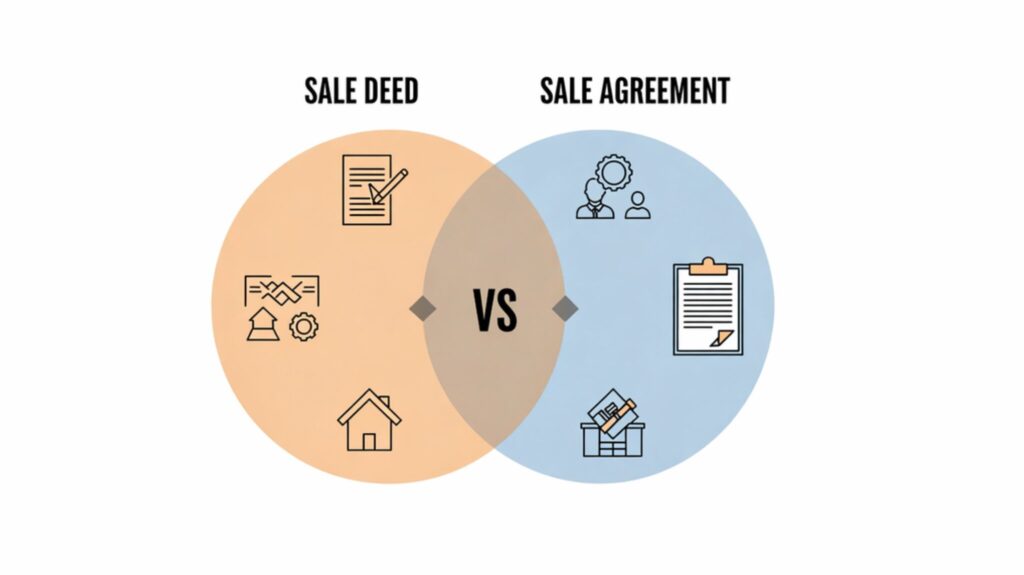
If you have ever tried buying property in Bangalore, you know how confusing the paperwork can get. Words like “sale agreement” and “sale deed” keep popping up, and most of us end up wondering, are they the same thing? Do I need both? And more importantly, how do these documents affect my ownership?  Don’t worry! In this article, we will break it all down for you. So, you will learn:  What is a sale agreement? What does a sale deed mean? The key difference between a sale and an agreement to sell. How to calculate stamp duty and registration charges in Bangalore. The common mistakes buyers usually make. By the end of this, you will know exactly what to watch out for when you buy property without needing to flip through legal textbooks.   What Is a Sale Agreement?  You can think of a sale agreement as a promise. It’s not the final step, but rather the step before the final step. When you and the seller agree on a property deal, you put that agreement in writing. That’s what a sale agreement is. This sale agreement typically has these things: The agreed property price  Payment terms like advance amount, balance, etc.   The timeline for completing the sale.  Conditions to be met before the final transfer.  If we talk about Bangalore, then here, a sale agreement is more of a safeguard. It makes sure that neither the buyer nor the seller backs out suddenly. Although legally it does not give you any ownership rights, it does give you a strong foundation to proceed towards a sale deed.  This is why it’s very important to distinguish between a sale and an agreement to sell. A simple way to remember this is Sale Agreement = Commitment!  What Is a Sale Deed? Now comes the big one: the sale deed. Unlike the agreement, a sale deed is the final legal transfer of ownership from seller to buyer. In fact, without a sale deed, you cannot call yourself the true owner of the property! How is it done? Simple! A sale deed is registered at the sub-registrar’s office in Bangalore and usually contains details like:  The names of the buyer and seller.  Complete property details.  The sale consideration (final price paid).  Date of transfer.  Terms and conditions of ownership.  And once this sale deed is signed and registered, congratulations, the property is legally yours! You can now sell it, mortgage it, or gift it—anything; it’s all your assets, after all!  A simple way to remember the confusion of the difference between a sale and an agreement to sell is a sale deed = ownership!  Key Differences Between Sale Agreement and Sale Deed  Let’s distinguish between a sale and an agreement to sell with an easy table:  Point  Sale Agreement  Sale Deed  Purpose  A commitment to sell/purchase  The actual transfer of the ownership  Timing  Happens before the sale deed  Executed after all terms are met  Legal Status  Doesn’t give ownership rights  Confirms legal ownership  Registration  Usually optional, but recommended  Mandatory  Usefulness  Protects both buyer and seller until the final sale  Makes the buyer the legal owner  So, in short, without a sale agreement, the deal basically lacks the structure. Without a sale deed, the deal does not have any legal standing. This means that both are important for very different reasons.   How to Calculate Stamp Duty and Registration Charges in Bangalore  If you are buying property in Bangalore, then here are two unavoidable costs for you to keep in mind: stamp duty and registration charges. Many people ask, “How to calculate stamp duty and registration charges in Bangalore?” The answer is it depends on the property value, buyer category, and property type.  Step 1: Check the Guidance Value  Step 2: Apply the Stamp Duty Rate  Step 3: Add Surcharge on Stamp Duty Step 4: Add Registration Charges  Step 5: Add Cess (if applicable)  For example, suppose you buy a flat worth ₹50,00,000 in Bangalore.  Stamp Duty @ 5% = ₹2,50,000  Surcharge on Stamp Duty = ₹12,500  Registration Charges (1%) = ₹50,000  Total payable = ₹3,12,500  So, if you are wondering how to calculate flat registration charges in Bangalore, the process is the same. Only the property type (apartment vs. plot) changes the value considered; the rest all pretty much the same! Common Mistakes to Avoid  What most beginners in real estate don’t know is that even seasoned buyers sometimes get caught up in legal traps. And it’s not even the big stuff, but really basic things, which sometimes can be hard to keep a check on. Below are the top mistakes you should avoid:  Skipping the sale agreement tops the list, as there are some buyers who directly jump to a sale deed. This can really backfire if any dispute arises. While it is an option, not registering the sale agreement can be problematic, so make sure you do add it for more security.   Ignoring the stamp duty and registration charges is another big financial oversight, which is surprisingly very common!  Always check and verify the property’s title and ownership before you sign anything!  A lot of people just rely on verbal promises, but in the real estate world, that does not work. Unless it is in the agreement, it does not exist legally, and well, no one is keeping track of what’s been said over a call.   Why Choose Guru Punvaanii?  At the end of the day, property buying is more than just paperwork. It’s about trust, and that is exactly where Guru Punvaanii shines! We are here to guide you through every step from the sale agreement to the sale deed.   We will guide you through the difference between a sale and an agreement to sell. This also includes making sure that all stamp duty and registration charges in Bangalore are clearly explained upfront. So, there will be no hidden surprises, and you will get full transparency and customer-first service.   Also, the best part? Our projects are RERA-approved and legally all clear! So, with us, you never have to worry about any hidden disputes. We all know how buying property is a big milestone, and to make that a smooth journey for you, we are here to help!  Conclusion  The world of property documents can feel very overwhelming at first. But now that you know the difference between a sale and an agreement to sell, it will be easier to navigate through your next investment.   A sale agreement secures your deal.  A sale deed makes you the legal owner.  Remember to account for stamp

How to check rera registered projects in bangalore
Legal & Documentation

How to Check RERA Registered Projects in Bangalore

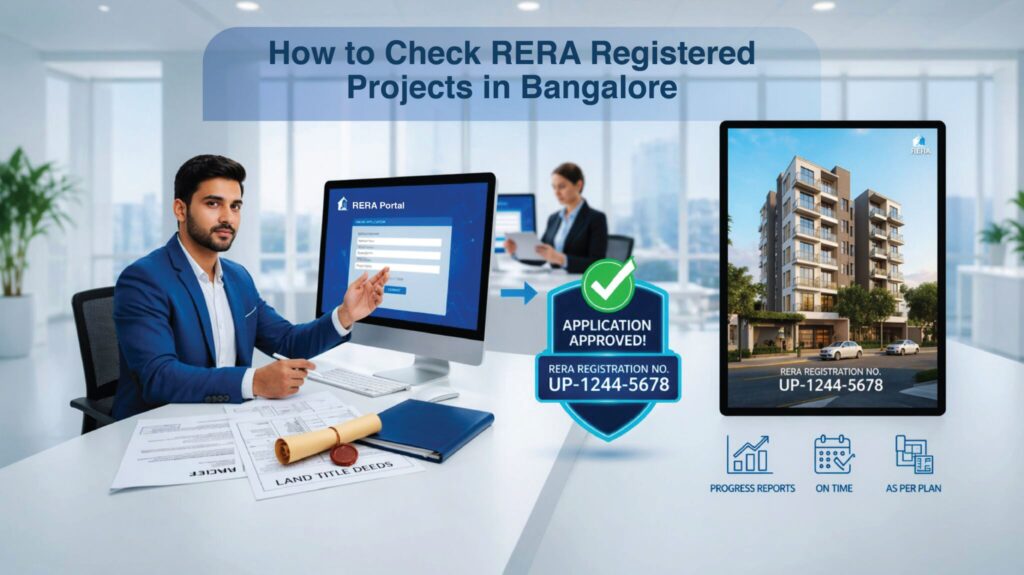
When you buy property, you make one of the largest investments that always comes with risk. To avoid this risk, the government of India introduced the RERA (Real Estate Regulation and Development) Act in 2016. This act makes the real estate purchase safer by bringing uniform guidelines across all Indian states.  The RERA Act applies to all residential and commercial projects, including apartments, plotted developments, villas, and office spaces. According to the legislation, builders are not permitted to promote, sell, or advertise any home unless it has been formally registered with the RERA authorities of the relevant state. The Karnataka RERA is in charge of this in Bangalore and throughout Karnataka. The act ensures the timely delivery of projects and protects buyers from false promises, cost escalations, and layout deviations.  You must continue reading to find the answer to how to check RERA-approved projects in Bangalore. What Is a RERA Number and Where to Find It? A RERA number is a unique registration ID issued by the state Real Estate Regulatory Authority to each approved real estate project. It acts as proof that the project complies with the RERA Act and has been registered officially. The number typically looks like PRM/KA/RERA/1234/2025 (format varies slightly by state). It is essential for developers to mention this number in all advertisements, brochures, and promotional materials.  You must be thinking of how to find the RERA number. Finding a RERA number is crucial before beginning any project since it allows you to determine the builder’s credibility. Be wary if a project states that “RERA applied” but does not provide the number. Await its formal approval and appearance on the RERA website. Benefits of RERA-Approved Projects Legal protection  You have the right to formally protest RERA and request reimbursement or compensation if the builder falsifies claims.   Transparency  Every update and document pertaining to the project is posted on the site. There are no surprises or hidden terms, so you can view the real contents up front.  Quality Assurance   The contractor is required by law to rectify any building flaws for free within five years.  Timely delivery  Strict time deliveries are offered by RERA. The builder is subject to fines if projects are not completed by the specified deadline.  But when you choose Guru Punvaanii, whether it’s Elegance, Ekadanta, or any of our premium projects, you’re not just investing in a home, you’re investing in peace of mind.  All our developments are RERA-approved, which means, with Guru Punvaanii, you don’t have to worry about delays, legal hassles, or quality concerns. Your dream home is backed by regulation, transparency, and our promise of excellence.  Steps to Check RERA Approval Visit the Karnataka RERA website  Go to the RERA Karnataka official website.  Navigate to registered projects  Choose Registered Projects from the dropdown menu after clicking on the Projects tab.  Search by project or developer  Enter the project name, district, and developer name. Or you can directly look by entering the RERA registration number.   View project details  Now, you can easily check the project details.   Things to Avoid No RERA number  If there is no RERA number, then you must be careful. This indicates that the builder is not authorized by law to market or sell the project.  Delayed possession  Years-long wait periods result from the lack of sanctions for project delays in the absence of RERA-approved plots in Bangalore.  Plan changes & fraud  Developers must adhere to authorized plans under RERA. Unregistered developments could abruptly alter their plans or cut out on facilities.  No accountability  Some builders may disappear after receiving booking fees or provide subpar building if there is no legal oversight.  Tips to Verify Project and Builder Credibility Cross-check the RERA number  Verify the RERA number on the Karnataka RERA portal against the one stated in advertisements or brochures.  Contact the developer  Request a copy of the certificate given to you by RERA. A true builder will never keep this a secret.  Use the complaints section  To find out whether any complaints have been lodged, search for the project or builder name on the RERA website.  Check agent/developer registry  To find out if the developer or real estate agent is also registered with RERA, use the portal. Legally, sales may only be facilitated by registered agents.  Consult experts  Still not sure? To have the documentation and land title examined, speak with a real estate specialist or legal adviser.  Conclusion  Checking for RERA-approved plots in Bangalore is a must whether you’re purchasing a house or investing in land. It serves as your first line of protection against delays, fraud, and legal issues. You may make sure your money is going into a project that is safe, controlled, and compliant with the law by going to the RERA Karnataka website, confirming the project and builder, and looking up the RERA number.  Therefore, take a minute to refer to our guide the next time you’re looking for RERA-approved projects in Bangalore. It’s your best bet for safe real estate ownership. Contact us for more details.

What-is-Stamp-Duty-Registration-Charges
Legal & Documentation

What Is Stamp Duty & Registration Charges in Bangalore?

Buying a property in Bangalore is a dream for many. But along with the excitement of finding your perfect home or villa plot, there comes a not-so-fun part that is understanding the stamp duty and registration charges in Bangalore.   Most people think, “I’ll just pay what the builder or agent tells me,” but knowing what is stamp duty and registration charges are saves you from last-minute surprises. Don’t worry. If you’re also in the middle of these “I-don’t-know-what-to-dos,” you’re not alone. In this article, we’ll break it all down in simple terms: what stamp duty is, what registration fees are, how much you’ll pay in Bangalore, and how to calculate everything. Think of this as your friendly guide before you step into your new home or gated villa plot.  What Is Stamp Duty & Registration Charges? Let’s start with the basics.   Stamp duty is a type of tax you have to pay to the state government whenever you buy a property. It’s like the government’s way of saying, “Congrats on your new place, now pay us our share so it’s legally valid.” So, whether you go for land, a villa, or an apartment, this step is important!  Registration charges are the fees you pay to officially register your property in your name. Without this step, the property won’t be legally yours on paper, no matter how much you paid.  Now, you may wonder: what is the difference between stamp duty and registration fees? It’s actually pretty easy to understand!  On one hand, stamp duty = tax on the property transaction.  And on the other hand, the registration fee = the cost of entering your ownership details into official government records.  Basically, you can think of it like this: stamp duty is the entry ticket to the property world, while registration charges are the formal stamp on your name in the record book. When you put them together, you can then get the complete cost, known as stamp duty and registration charges in Bangalore. How Much Are Stamp Duty Charges in Bangalore? Here’s the part everyone is curious about: stamp duty charges in Bangalore. And guess what? The state government has fixed these charges based on the property value.  Here is the breakdown:  2% – if the property value is less than ₹20 lakh.  3% – if the property value is between ₹21–₹45 lakh.  5% – if the property value is above ₹45 lakh. So, let’s say you buy a villa that is worth ₹50 lakh. This means your stamp duty charges in Bangalore would be 5%, which comes to ₹2.5 lakh. This is why knowing Karnataka property registration charges matters. This is what many people miss and later regret not counting these charges in their budget.   So, whenever you hear someone say, “budget for extra costs,” what they actually mean is the stamp duty charges in Bangalore plus the registration fee. These rates apply whether you’re buying an apartment, an independent home, or a gated villa plot with Guru Punvaanii.  Additional Cess & Surcharges But wait, there’s more! On top of the basic stamp duty charges in Bangalore, the government also collects a cess and a surcharge!  A cess of 10% on the stamp duty amount  A surcharge of 2% if the property is in an urban area and 3% if it is in the rural parts.   For example, if your property costs ₹50 lakh, the stamp duty will be 5% (₹2.5 lakh). Then you add a 10% cess (₹25,000) plus a 2% surcharge (₹5,000). That means your effective stamp duty isn’t just 5%, but now it’s closer to 5.6%.  Here is another example, for a property worth ₹50 lakh:  Stamp duty = ₹2.5 lakh (5%)  Cess (10%) = ₹25,000  Surcharge (2% urban) = ₹5,000  Total = ₹2,80,000  See how the numbers add up quickly?  This is why people often search for a stamp duty registration charges calculator to have clarity beforehand. Because yes, numbers can be confusing when it comes to stamp duty charges in Bangalore, but with a simple calculation, you can get a better idea of the total.  Registration Charges in Bangalore Now let’s talk about the second half of the cost, that is, the registration charges in Bangalore. Unlike stamp duty, which changes with property value, registration charges are flat: 1% of the property value.  So, whether you’re buying a ₹25 lakh apartment or a ₹1 crore villa plot, the property registration charges in Karnataka will be exactly 1% of the property’s value. That’s why, when people ask what the difference between stamp duty and registration fees is, the answer is simple: one is a tax (stamp duty) and the other is a fixed legal fee (registration). Put together, you’ll be paying stamp duty + cess + surcharge + registration charges.  When combined, the two make up your Karnataka property registration charges, and well, you cannot skip them if you want your property to be legally yours! Stamp Duty Registration Charges Calculator & How to Calculate Want to find the quickest way to figure out your total cost? Then you are in the right place! The easiest way to know your cost is to use a stamp duty registration charges calculator. And the good news is that the Karnataka government has made it available through the Kaveri Online Services portal.  All you must do here is enter your property value, location, and type (residential plot, villa, or apartment), and it gives you the exact stamp duty and registration charges in Bangalore. Here is a quick example for you: Stamp duty = property value × applicable percentage  cess (10% of stamp duty)  surcharge (2% urban / 3% rural)  registration fee (1% of property value) So, this is how the numbers will look:  Property value: ₹40 lakh  Stamp duty (3%): ₹1.2 lakh  Cess (10%): ₹12,000  Surcharge (urban 2%): ₹2,400  Registration fee (1%): ₹40,000  Total = ₹1.74 lakh This way, the stamp duty registration charges calculator removes all guesswork and will give you a clear picture of what you are stepping into, financially.  Process: How to Pay & Register Okay, now that you know the numbers, how do you pay the stamp duty and registration charges in Bangalore? The process is simple but must be done right: You have two ways: Online Payment: Visit the Kaveri Online Services Portal Enter the property details and buyer/seller information  Pay the stamp duty charges in Bangalore and registration charges in Bangalore online through net banking.  Offline Payment Book a slot at your local sub-registrar’s office.  Carry the sale deed, ID proofs, and payment receipt.  Once you know what is stamp duty and registration charges in Bangalore, keep a note of this checklist for

Scroll to Top