
Guru Punvaanii

Author name: Mallika Sushma

Mr. Sanjay Baid
Guru Punvaanii

Mr. Sanjay Baid: The Visionary Behind Guru Punvaanii’s Success 

In the ever-evolving real estate sector, success stories are often built on resilience, innovation, and an unwavering commitment to excellence. One such story is that of Mr. Sanjay Baid, the founder of Guru Punvaanii, a brand that has emerged as a beacon of trust, affordability, and transparency in real estate. From his early days in the industry to leading Guru Punvaanii to new heights, his journey is nothing short of inspiring. This blog delves into his exceptional entrepreneurial mindset, the challenges he overcame, and his visionary approach that continues to shape the future of real estate.  The Early Days: A Visionary in the Making Mr. Sanjay Baid’s journey in real estate began over 20 years ago, long before he laid the foundation of Guru Punvaanii. His experience in the field gave him a keen understanding of market dynamics, customer pain points, and the gaps in the industry. Recognizing the need for transparency and affordability in real estate transactions, he set out on a mission to create a brand that would redefine industry standards. Driven by his deep passion for real estate and a strong desire to make property investments more accessible and transparent, Sanjay envisioned a future where buyers could invest with confidence, free from skepticism. With years of industry experience and valuable market insights, he recognized the need for a trustworthy, customer-centric real estate brand. This vision became the foundation of his entrepreneurial journey, ultimately leading to the establishment of Guru Punvaanii in 2019. Since then, the company has been committed to delivering high-quality, reliable, and innovative real estate solutions. The Birth of Guru Punvaanii In 2019, Mr. Sanjay founded Guru Punvaanii with a clear vision: to make approved projects more affordable, transparent, and accessible. Unlike conventional real estate businesses that often prioritize profits over people, Guru Punvaanii was built on the principles of integrity, customer satisfaction, and long-term value creation. Starting a new business is never easy, especially in a competitive industry like real estate. However, his strategic approach and unwavering determination helped Guru Punvaanii establish a strong foothold in the market within a short span of time. His leadership ensured that every project under the brand adhered to the highest standards of legal compliance, ethical practices, and customer-centricity.  1. Challenges and Triumphs Like any entrepreneurial journey, he also faced numerous challenges along the way. Some of the biggest hurdles included market fluctuations, regulatory hurdles, and customer skepticism. However, he tackled these challenges with a solution-driven mindset and innovative approach.  2. Overcoming Market Fluctuations Real estate markets are volatile, influenced by economic changes, government policies, and external factors. By adopting a customer-first approach and focusing on long-term value, Guru Punvaanii was able to maintain a steady growth trajectory despite market fluctuations.  3. Ensuring Transparency and Trust Many customers in the real estate sector have concerns about hidden costs, unclear legal processes, and delayed projects. Sanjay Baid prioritized transparency by ensuring clear documentation, RERA approvals, and ethical pricing models. This approach helped Guru Punvaanii build a reputation for reliability.  4. Navigating Regulatory Challenges The real estate industry is heavily regulated, and compliance with legal frameworks is crucial. Sanjay Baid ensured that Guru Punvaanii adhered to all legal requirements, zoning laws, and quality benchmarks, reinforcing customer confidence in the brand.  A Commitment to Innovation and Growth  Sanjay’s leadership style is a blend of strategic vision, innovation, and customer-centric decision-making. As the Managing Director (MD) of Guru Punvaanii for 5+ successful years and now leading the company into another year of achievements, he remains at the forefront of every major decision. His leadership philosophy is based on three key pillars:  1. Customer-Centric Approach   Sanjay firmly believes that the success of a real estate company lies in its ability to meet and exceed customer expectations. His commitment to delivering value has earned Guru Punvaanii a loyal customer base.  2. Innovation-Driven Growth From leveraging technology for seamless property transactions to introducing innovative financing options, he ensures that Guru Punvaanii stays ahead of industry trends.  3. Building a Strong Organizational Culture   A company is only as strong as its team. Under his leadership, Guru Punvaanii has cultivated a dynamic and motivated workforce, ensuring that every team member shares the company’s vision of excellence.  Milestones and Achievements Over the years, Guru Punvaanii has achieved remarkable milestones, cementing its reputation as a trusted name in real estate. With successful residential and commercial developments, the company is known for innovation, sustainability, and customer satisfaction. By integrating smart technologies and eco-friendly designs, Guru Punvaanii ensures modern, high-quality living spaces. Strategic partnerships and industry accolades further highlight its excellence, making it a leader in shaping the future of real estate. Some notable accomplishments include:  Successful Completion of Multiple Projects  Expansion into New Markets  Recognition as a Transparent and Customer-Friendly Brand  Introduction of Affordable and Approved Housing Projects  Consistent Growth in Customer Trust and Industry Standing  Each of these milestones is a testament to Sanjay Baid’s foresight, resilience, and leadership.  The Road Ahead: A Vision for the Future As Guru Punvaanii steps into another successful year, Mr. Sanjay Baid remains steadfast in his vision of achieving bigger and bolder goals, driving the company toward greater success. The real estate sector is rapidly evolving, with a growing emphasis on sustainability, digital transformation, and smart housing solutions. Recognizing these trends, Guru Punvaanii is committed to integrating eco-friendly designs, adopting cutting-edge technologies, and enhancing customer experiences. By embracing green building practices, AI-driven property management, and smart home automation, the company aims to redefine modern living while ensuring long-term value and reliability for investors. Under his leadership, Guru Punvaanii is poised to:  Expand its project portfolio to cater to diverse customer needs.  Integrate cutting-edge technology for seamless property transactions.  Enhance sustainable and eco-friendly real estate practices.  Strengthen customer engagement and service offerings. Conclusion His journey from an ambitious real estate professional to the visionary founder of Guru Punvaanii is an inspiring tale of perseverance, innovation, and leadership. His customer-centric approach, commitment to transparency, and strategic foresight have transformed Guru Punvaanii into a trusted and respected real estate brand. As he continues to shape the future of the industry, one thing remains certain: Mr. Sanjay Baid’s legacy will be defined by his relentless pursuit of excellence and his unwavering commitment to making real estate investments secure, affordable, and transparent for all. Contact us for more details.

Real estate Investment
Investment

Why Early Real Estate Investments Lead to Bigger Returns

While you are already sure of securing your future with an investment in real estate, have you chewed over when you want to invest and over what? To leave things untouched until the last minute is the way we are. Slamming this human equation, Corona has passed by as a heartbreaking memory while coaching us to build financial security at our earliest convenience.  The two terrible years of the pandemic have been a period of disbursement and not investment for many. As the state of affairs snaps back, people are back to rebalance their economies to home in on investment and savings.  You get to play a trump card by choosing to prudently rise as an early investor in the burgeoning world of realty. Indeed, it’s fruitful if you consider the tremendous perks of investing in villas, land/standalone property in the early stages of time and development.  Make Maximum Value At Minimum Cost Any investment is a matter of value, and in buying real estate, the term ‘value’ is not confined to money. The meaning of what constitutes value varies considerably from a homebuyer to a land buyer. If you are an early homebuyer, buying just as the developer launches a new stage presents you with the perk of owning a house stationed in an ideal locale with all the features at the best deal. For early land investors, purchasing land early in life and building a home on it later, when they have enough savings, turns out more cost-effective than paying EMIs on purchased homes. In reality, the land is limited in supply, and the accelerated population growth is causing the prices to soar every year with shooting demand. As such, land stands out to be a stellar asset deal at any juncture in the future. Early Investment Is Your Retirement Nest Egg Early investment in real estate guarantees a comfortable retirement nest. Real estate is a lucrative instrument to secure your retirement with income sources from property appreciation, renting, leasing, and income from operations. If you have a goal to sell the property, it is advisable to invest early. The lump sum value of capital appreciation earned at a low cost can pay for your long-term purposes of a retirement home, children’s education or marriage. Besides rentals being a high-yielding supplement to your salary, property owners can earn extra by offering chargeable services to tenants leasing the property. However, real estate being a tricky business, it is advised to learn about real estate blunders and take prudent steps to enhance your investment strategies, as not all advertised properties turn lucrative.  Power of Compounding Compound returns are an attractive aspect of real estate. If you seek compound returns, you must start early, as it is time-consuming. To compound real estate, start small with inexpensive properties and reinvest the net cash flows of rentals and operating income collected from each property with the right mindset. Another cue to compounding is to force yourself to save. When cash flows from the property aren’t consistent, money set aside as savings can keep your real estate compounding strategy on track. Investment in real estate is the art of patience. There are various strategies to follow while investing in real estate. But the most popular and effective one is to begin as an early bird and hold the property for a long time. Can’t wait to invest? Come to Guru Punvaanii, the trusted property developer in Karnataka. We build properties for all your investment needs. From lavish apartments to plush villa plots in Attibele, our portfolio offers attractive properties you cannot miss! Contact us for more details.

Checklist Before Buying a Home in a Gated Community
Property Buying Guide

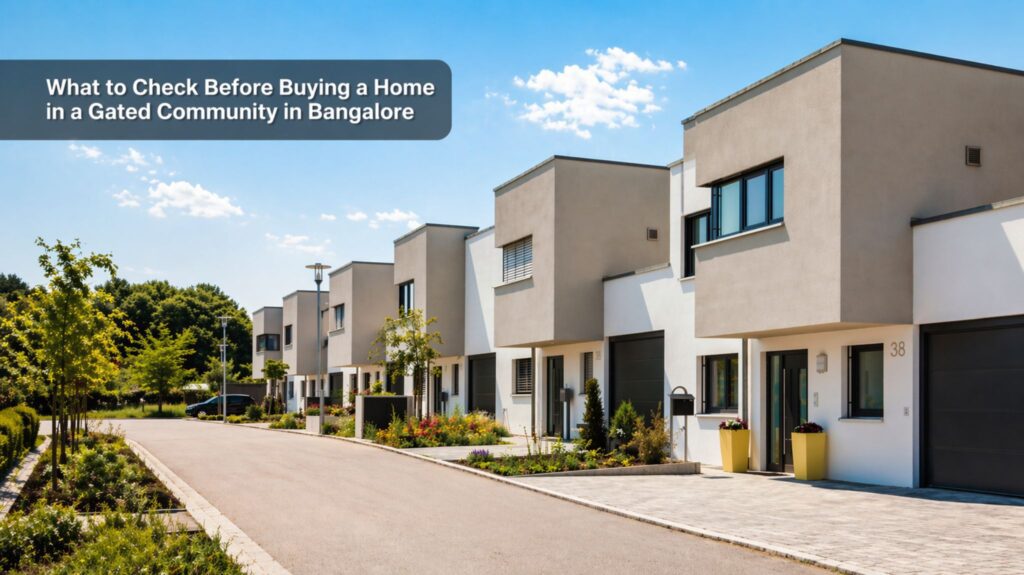
What to Check Before Buying a Home in a Gated Community in Bangalore

Buying a home in a gated community is not just about having properties—it is about investing in a lifestyle. These communities offer a rare mix of security, convenience and community life that urban owners want. But while the leaflets show the best, real life is about the details. From the builder’s reputation to long-term habitability, you have long been evaluating before signing the agreement.  For families, a gated community offers this perfect balance: a safe recreation area for children, peaceful walking zones such as a park for elders and attentive amenities for working professionals. But how do you separate polished marketing from the real value? Let’s break down everything you should check before you make that decision.   Why Choose a Gated Community in Bangalore? With their growing population, infrastructure development and busy professional lives, buying a property in Bangalore may seem overwhelming. A gated community in Bangalore acts as a sanctuary in all this chaos. These developments offer the following:  24/7 security and CCTV surveillance  Green and landscape environments such as a park, a laughter court and a yoga area  Modern clubs, gymnasiums, pools and more  Strong community life and cultural immersion  Higher appreciation value of the property  Most of these projects are also in high-demand zones that see the best resale value and rent returns over time. For example, some projects by Guru Punvaanii, like Elegance and Shyam Residency, are designed to accommodate the needs of different age groups and offer the typical features expected in a gated community. Which Location Works Best for You? Selecting an ideal location is important, especially in Bangalore, because here traffic can turn short distances into long waiting times and commutes.  North vs South Bangalore—What’s the Difference?   North Bangalore is known for better planning, wide roads, and quick access to the airport. It is the ideal location if you work near Hebbal, Yelahanka, or Manyata Tech Park. South Bangalore is culturally rich and has established areas such as Jayanagar and JP Nagar. South Bangalore is a good deal for families who want serenity and good schools around.  Whichever location you choose, make sure it is well connected to major roads, public transport and daily conveniences.  Are You Close to Work, Schools, & Hospitals? The home might check all boxes on paper, but if it adds hours to your daily commute, it may not be worth it. Check:  The house you are planning to buy might look like the perfect fit for you on paper, but if it adds hours to your daily commute, it may not be worth it. Remember to check:  Distance from your office School options within a 5 to 10 km radius Availability of healthcare facilities close Nearby supermarkets, pharmacies and parks A home is more than just its walls—it’s about how easily your life fits into the neighbourhood. Want the full checklist of what to look for before buying a home in Bangalore? What Type of Property Is Right for You? Villas, Apartments, or Row Houses? Gated communities in Bangalore have everything from compact 1 BHKs to high-end luxury villas. Choose based on your budget and lifestyle.  Villas: More privacy and space, but larger maintenance.  Apartments: Easier to manage, comparatively lower maintenance, but less space.  Row houses: A good middle ground with moderate privacy and shared amenities.  Ready-to-Move vs Under-Construction – What’s Safer?   Ready-to-Move: What you see is what you get. There is no risk of delays. Under Construction: It is comparatively cheaper but riskier as well. Always check RERA registration and construction timelines.   Is the Project Legally Clear? Legal clarity is very important when you’re buying a home in Bangalore, especially in gated communities.  RERA Registration: Mandatory for all new projects. Check out the builder’s RERA number on the official Karnataka RERA website. Khata Certificate: Make sure the property has a valid Khata A or B (preferably Khata A), selling deed, construction plan approval and occupation certificate. A legal consultant can help you examine all documents before any payment is made.  What About Security and Safety Measures? Are there working CCTV cameras in the input, output and common areas?  Is there a 24/7 security system in force?  Does the community use an application-based visitors management system?  Are there fire safety and emergency exit plans?  These are some non-negotiables in any gated community in Bangalore.  Are the Amenities Truly Useful? These amenities make life easier—but only if you really use them.  Prioritize essentials like elevators, power backup, children’s play area, gymnasiums, water supply, and walking or jogging paths. Fancy features like mini theaters for movie screening or meditation pods for wellness may look attractive, but they might not add real value to your daily routine. Make sure there’s an on-site maintenance team for plumbing, electrical work and maintenance of the common area.  What Are the Monthly Maintenance Costs? People often ignore this at first, but it adds up over time. Check thoroughly:  What are the monthly maintenance charges, if any? What services are covered in these charges? Are there any annual increases or hidden charges in this?  Also, check for extra costs like parking charges, clubhouse membership, or one-time lump sum charges for any other amenities.  How Does the Builder’s Reputation Hold Up? Don’t just go by name—do your research properly.  Check past projects: Were they completed and handed over on time without any legal issues?  Read online reviews: Sites like Quora, Reddit, or even Google Reviews can reveal the ground reality.  If possible, visit previous developments and talk to current residents.  What’s the Resale or Rental Potential? Whether you are investing or planning to live in the long run, think about the future.  Is the community in a rapidly developing area?  How is the rental demand in the locality?  Are there in-progress infrastructure projects that can increase the value of the property?  A gated community in Bangalore, with strong perspectives, will always be a better bet.  Have You Seen the Model Flat or the Sample Villa? Never commit without a site visit. Check:  Carpet area vs super built-up area Quality of flooring, doors, fittings, and kitchen setup Natural lighting and ventilation Water supply and waste management systems  If you’re buying remotely, insist on a virtual walkthrough.  Final Checklist Before You Sign  Verify builder’s RERA registration  Check Khata certificate and legal documents  Visit the property location at different times of the day  Talk to current residents if possible  Get a full understanding of all fees and maintenance costs

Under Construction vs Ready to Move Property
Property Buying Guide

Under Construction vs Ready to Move Property Which is Better

While purchasing a home, one of the most prevalent dilemmas for property buyers is deciding between under-construction flats and ready-to-move-in properties. A major factor in decision-making here is the occupancy certificate (OC) status. Properties that lack an OC are levied with Goods and Services Tax (GST), entail waiting for possession, and can have execution risks. Conversely, those with an OC are legally available for occupation, enjoy no GST, and provide instant usability. Therefore, the fundamental question: do you choose under-construction flats with lower entry points and appreciation prospects, or do you take the certainty and convenience of ready-to-move-in apartments?   This article demystifies the costs, taxes, risks, financing, and returns so that you can make an informed choice.  Price and Total Cost of Ownership A key draw of under-construction apartments is their lower base price tag. Developers tend to start projects at reasonable prices, providing early-bird discounts. But the cost of ownership has to account for more than the sticker cost.   For under-construction flats: Base price + 5% GST (or 1% for applicable affordable housing).  Rent + pre-EMI overlap till possession.  Fit-out expenses after the flat is handed over.  For ready-to-move-in flats:  Base price alone (no GST).  Stamp duty and registration fees are paid in both scenarios.  For example: A ₹70 lakh under-construction property might incur an extra ₹3.5 lakh GST. If construction is for three years, you might also pay rent in the meantime, in addition to pre-EMIs. The same-valued ready-to-move flat would avoid GST altogether, and you can save on rent as you can move in straight away. Taxes and GST The regime of GST has established a distinct cost differential between the two types of properties.  Development flats invoke GST at 5% (or 1% for low-cost projects). Crucially, buyers do not have input tax credit on this payment.  Ready-to-move properties with valid OC are exempt from GST. Buyers simply pay stamp duty and registration fees.  Practical advice from Guru Punvaanii: Always ensure the OC has been issued prior to purchase. Also, watch out for other taxable charges such as clubhouse or parking charges, which may still incur GST if charged separately.  Possession Timelines and Certainty With under-construction flats, possession will vary based on the under-construction property.  While contracts provide for a date of handover, due to funding, approval, or labour shortage issues, delays are the norm.  Ready-to-move-in apartments provide assurance. You can visit the actual apartment, verify it for snags, and occupy it as soon as registration is done.  The cost of time cannot be overlooked; rent and EMI overlaps during delays can play havoc with your finances. For most buyers, the comfort of occupancy on day one is more than a premium price tag.  Risk and Legal Safeguards (RLSA Focus) The Real Estate (Regulation and Development) Act (RERA) has enhanced transparency for flats under construction, but there are still risks involved.  Safety measures include:  RERA registration and public disclosure of project information are mandatory.  Delayed possession compensation with interest.  Five-year defect liability after handover.  But as Guru Punvaanii points out, even then buyers must:  Verify builder’s RERA registration page.  Keep allotment letters, payment receipts, and communications.  Read sale agreements carefully for penalty clauses.  For ready-to-move-in apartments, the primary protection is confirming the OC and ensuring that the property is clear of encumbrances.  Financing and Cash Flow Financing is different for both types of properties.  Under-construction apartments typically have a construction-linked payment schedule. EMIs begin as pre-EMIs on the loan that has been disbursed, which can go on for years without the advantage of occupation.   Subvention schemes (when the builder pays the pre-EMIs) can simplify the situation but then have the underhanded risk of trapped money if the construction halts.  Ready-to-move-in apartments need an almost-full upfront payment at acquisition. EMIs begin right away, but because you can take possession or lease the building immediately, cash flow recovers quicker.  Astute buyers ought to compute overall interest expenditure under scenarios to determine which suits their long-term needs.  Customization and Specifications Customization is one often not-given-enough-thought aspect.  Off-the-plan properties do provide some leeway; purchasers can order layout adjustments or finish upgrades during the construction process. That said, changes are circumscribed by builder protocols and involve the threat of “variation clauses.”  Ready-to-move-in flats reveal what you will receive. Options for customization are limited, but the advantage is that you see the actual unit rather than working from brochures or demo flats.  Investment and Returns From an investment standpoint:  Under-construction flats enable entry at a lower cost. As milestones of construction are achieved, value of the property generally increases. Yet, there is greater execution risk—if the project is held up, your capital is trapped.  Ready-to-move-in apartments give immediate rental return and have lower vacancy risk. While capital growth might be sluggish compared to early-stage properties, the guarantee of returns makes them attractive to several investors.  Liquidity too varies; completed units are more easily disposed of, while under-construction apartments are greatly dependent on the mood of the market. Hidden Costs and Due Diligence Apart from base price, the following should also be budgeted for:  Floor rise charges, preferential location charges (PLC), clubhouse fees.  Maintenance deposits, parking charges, society formation costs, and sinking fund contributions.  Due diligence is a must: verify land title, approved building plans, encumbrance certificates, and completion/occupancy certificates. Always visit the site to determine construction quality and neighbourhood infrastructure. Guru Punvaanii stresses that skimping on due diligence will cost buyers much more down the line.  Buyer Checklists For under-construction flats:  RERA registration and transparent timeline.  Payment plan stage-wise and penalty.  Builder’s reputation and litigation history.  Delay compensation details.  GST effect and financial cushion for delays.  For ready-to-move-in apartments:  Check OC and completion certificate.  Check unit for defects and utility preparedness.  Review setup costs and society maintenance fees.  Double-check the clear title and lack of dues.  Conclusion The under-construction vs ready-to-move property—what is better?   Debate has no blanket response. If you are risk-averse, can wait, and are willing to take on some risk for future appreciation, under-construction apartments might suit your needs. If certainty, convenience, and instant use matter most, ready-to-move-in flats obviously triumph. Finally, the choice lies with your investment goals, timeline, and budget. As Guru Punvaanii recommends, do proper due diligence,

plots on Mysore road
Investment

Why Are Plots on Mysore Road a Smart Investment?

In the realm of real estate investments, the trajectory of the market is often steered by emerging trends that promise both financial growth and a secure future. One such trend that has been gaining immense traction is the investment in plots on Mysore Road. This avenue of investment has caught the attention of astute investors seeking to capitalize on the strategic location, infrastructural development, and potential for appreciation. Guru Punvaanii, a trailblazing name in the real estate domain, stands as a catalyst in connecting investors to these promising opportunities.  Location and Connectivity: A Strategic Advantage Mysore Road has emerged as a corridor of prosperity and development. The strategic location, just a stone’s throw away from the city center, coupled with excellent connectivity through major roads and highways, makes it an attractive destination for both residential and commercial endeavours. With the expansion of the NICE (Nandi Infrastructure Corridor Enterprise) Road and the upcoming Bangalore-Mysore Infrastructure Corridor (BMIC) project, accessibility to this region is poised to witness a quantum leap. As a result, investing in plots near Mysore Road not only ensures easy accessibility but also guarantees a hub for potential growth and appreciation. Infrastructure and Development: Paving the Path for Growth The synergy between a burgeoning location and well-planned infrastructure is where the true investment potential lies. Guru Punvaanii, with its meticulous approach, has identified this confluence and curated a portfolio of plots that align with the upward trajectory of Mysore Road’s development. Whether it’s proximity to educational institutions, healthcare facilities, entertainment centers, or employment hubs, Guru Punvaanii’s offerings present a comprehensive package that caters to the needs of a modern lifestyle.  Growth Potential of Plots on Mysore Road Investing in plots on Mysore Road isn’t just a short-term strategy; it’s a long-term commitment to securing one’s financial future. The potential for appreciation in this region is underpinned by strategic urban planning, infrastructural advancements, and the inherent allure of being near a bustling metropolis. Guru Punvaanii’s meticulous site selection ensures that investors are positioned to reap the benefits of this growth curve, making their investments not only a wise financial decision but also a secure one.  Guru Punvaanii: Your Partner in Investment Success In the dynamic landscape of real estate investments, having a reliable and visionary partner can make all the difference. Guru Punvaanii, with its legacy of trust, transparency, and customer-centric approach, emerges as the ideal ally for investors seeking to harness the investment potential near Mysore Road. With a portfolio meticulously curated to align with the growth trajectory of the region, Guru Punvaanii not only offers plots for sale but also opens the doors to a future brimming with possibilities.  Conclusion In conclusion, the growing trend of investing in plots on Mysore Road is a testament to the evolving dynamics of real estate investments. With Guru Punvaanii as your guiding light, this trend transforms into an opportunity for financial growth, security, and a brighter tomorrow. Embrace the future today and embark on a journey of investment success with Guru Punvaanii. Contact us for more details.

What Is a Sale Deed
Legal & Documentation

What Is a Sale Deed? Format, Types & Registration in Karnataka

One of the biggest financial decisions in a person’s life is purchasing or selling real estate, which also requires important legal paperwork. The sale deed document is the most crucial of these. It is the final document that confirms the transfer of ownership from the seller to the buyer. A seamless and transparent real estate transaction in Karnataka, where the real estate market is regulated and competitive, requires a comprehensive understanding of the sale deed and its ramifications. This article describes the sorts of property deeds, the distinction between a sale deed and a sale agreement, types of sale deeds, what the sale deed paperwork is, and how to register a sale deed in Karnataka. Being knowledgeable about the sale deed format in Karnataka and its legal implications can help you protect your investment and prevent expensive errors, regardless of your level of experience as an investor or first-time homebuyer.  What Is a Sale Deed? A sale deed is a legally enforceable document that formally transfers ownership rights from the seller to the buyer. The most important legal document in a real estate transaction needs to be registered to be enforceable. After all the conditions specified in the selling agreement have been met, the sale deed agreement is usually executed. Sale agreement and sale deed: A sale agreement specifies the terms and purpose of the sale between the parties. The actual legal document that completes the deal, however, is the sale deed. Guru Punvaanii helps property buyers understand these legal processes clearly, ensuring safe and transparent real estate transactions.  Conveyance Deed Versus Sale Deed A sale deed is a particular kind of conveyance deed that is used for sales. Gifts and other non-monetary transfers may also be included in a conveyance deed.  Why It’s Important & Purpose of It The selling deed document fulfills several essential functions: Legal Evidence of Ownership In accordance with the Indian Registration Act of 1908, the deed serves as official evidence of property ownership after it has been registered. Protection For Both Buyers And Sellers It delineates each party’s rights, responsibilities, and liabilities, thereby averting conflicts. Credibility of Finances In order to apply for a house loan or to sell the property again, a registered sale document is necessary. Preventing Fraud By confirming property information such as the title, liens, and prior ownership, it helps to prevent typical errors in sale deed transactions.  Types of Deeds in Property Sale deeds, conveyance deeds, gift deeds, mortgage deeds, and other legal documents are examples of deeds, which are executed to transfer or modify property rights.  Common deeds in Karnataka:  A gift deed transfers property without asking for money. Property is offered as security for a loan through a mortgage deed. A lease deed gives you the temporary right to use a piece of real estate. Exchange Deed, where the parties exchange properties. A partition deed is used to split up property that is jointly owned. A conveyance deed is a general phrase for legal property transfer documentation.  Sale Deed Format & Components The typical format for a selling deed consists of:    The document’s title and introduction make it obvious that it is a sale deed.  Information on the Parties: Buyer and seller names, addresses, and IDs.  Property Description: location, borders, area, and survey number.  Sale consideration: The agreed-upon total and the method of payment.  Title Transfer: A legal provision that transfers ownership.  Details of Possession: Date of transfer of possession.  Indemnity Clause: The seller guarantees that there are no legal problems with the property.  The property’s debt-free status is attested by the encumbrance certificate.  Default Clause: Specifies what will happen if there is non-compliance.  Witnesses and Signatures: The transaction needs to be attested by a minimum of two witnesses.  These elements guarantee the comprehensiveness and legal enforceability of the sale deed agreement. Difference Between Sale Deed and Sale Agreement / Conveyance Deed It’s critical to comprehend how a sale deed differs from a sale agreement:  Sale Agreement: A commitment made in the future by the buyer and seller that must be fulfilled before the sale is completed.  Sale Deed: Signed once real ownership has been transferred and all terms of the selling agreement have been met.  Likewise, the scope of the distinction between a conveyance deed and a sale deed is found. Sale deeds are conveyance deeds, but conveyance deeds are not always sale deeds.  How to Register a Sale Deed in Karnataka For a sale deed to be legally legitimate, it must be registered. Here’s how Karnataka residents do it:  Prepare the necessary documents, such as the encumbrance certificate, NOC, identity documents, and the selling deed.  Typically, 1% of the property value and 5% of the stamp duty are paid.  In front of two witnesses, the parties sign the document.  Use the Kaveri Online Services portal to make an appointment.  Biometric capture and verification were completed at the office.  The buyer receives the registered deed.  You can also look for online registration Although online document uploading and fee payment are possible through Karnataka’s Kaveri portal, execution still requires physical presence.  Common Mistakes to Avoid in Sale Deed  Steer clear of these typical errors while preparing and registering sale deeds:  Failing to check for encumbrances or confirm the property ownership.  Inadequate descriptions of the properties.  Missing witness information or signatures.  Stamp duty was not paid.  Not registering the deed in the time range permitted by law.  Not updating municipal records (transfer of Khata).  After Registration: What Next? After the sale deed registration, you ought to: Take Possession: The seller gives the documentation and keys. Update Khata: Make sure local records reflect the new ownership. Apply for Utilities: Move your property tax, water, and electricity accounts. Protect the Deed: This can be done by keeping hard and digital copies in a secure location. Loan or Resale: Future sales or mortgages require a registered sale deed.  Conclusion The sale deed document is an essential legal instrument that ensures a secure and lawful transfer of property. You can avoid legal issues and financial losses by comprehending the meaning of the sale deed, being aware of its format, and correctly completing the Karnataka sale deed registration process. To make wise selections, don’t undervalue the significance of understanding the differences between a sale agreement format in Karnataka, a conveyance deed, and a sale deed agreement.  Do you need help creating or registering a sale deed format in Karnataka? For professional legal assistance

Revolutionizing Real Estate with Technology
Market Trends & Insights

Revolutionizing Real Estate with Technology

Since the 1990s, there has certainly been a monumental development in technology, and today, it is evident that a world without technology yields minimal progress. While the first wave of technology use in prop-tech began in the early 2000s, at present, the real estate market has been booming because of the growth of cutting-edge technological solutions. In fact, the post-COVID era is witnessing a rapid evolution when it comes to 3D rendering, virtual walkthroughs, and big data and analytics. Even though the astounding future security and capital returns have drawn the real estate market to full heights, a sector with technology will definitely rise as the cream of the crop. Companies like Guru Punvaanii are also embracing modern innovations to enhance customer experience and project transparency. Right from smart homes to smart cities, let’s get a drift of how real estate technology trends are transforming their future.  Tech Start-Ups at the Fore Right from helping with sales and marketing with diverse technological real estate platforms to encouraging the concept of fractional ownership, numerous startups are changing the game with their attempts to curate secure and profitable avenues for real estate owners, stakeholders and customers. Besides, growing trends like AI and machine learning have been reaching soaring heights in the 21st-century era. Making information easily accessible to consumers, even simple technology-driven solutions are shooting up investment capacities with whopping rates of success.  The Emergence of Big Data and Analytics  You might have heard of the common term RERA. Ever pondered how essential it is? Well, as the Real Estate Regulatory Authority unfolds, the accessibility to quarterly data on the construction status of most projects seems undemanding. With the coming of instant buying models, companies use AI models to understand the history of transactions and local market conditions, which will fulfill many housing demands sooner. Besides, we have unparalleled and hitch-free access to property documents and other legal documents at present.  Enhanced Chatbots and Tech Platforms As technology-driven solutions develop, chatbots have truly turned out to be a massive advantage. Back in history, a human agent attending to all your requests was beyond imagination. Besides, there are numerous apps for property listing today that tend to attract most of those who want to save time. Moreover, as the awareness on blockchain comes to light, we can now forge better transparency and efficiency when it comes to significant property records.  The Evolution of Virtual Reality Amidst life’s busy monotone, one can hardly visit their plot as often as before to check on their future abode’s progress. The evolution of virtual reality has certainly paved the way for stakeholders and customers to envisage a fully furnished and beguiling hearth that they can reside in in the near future. Transcending beyond the concept of 3D rendering, the cutting-edge technology solutions through virtual walkthroughs have turned out to be a huge advantage for the real estate market.  The Blossoming Era of Smart Homes Are the tiny worries like setting up the security alarm, switching off the geyser or your child’s security keeping you on tenterhooks? Well, smart homes help you let loose your quandary, as you can now connect all the devices and appliances in your home so that they can communicate with you in return. A quick glance at your smartphone or tablet can make your house react to your commands. In fact, with the progression of astounding technology in India, a smart home may soon turn out to be a few kms away from you! With the advancing technological approaches in the real estate sector, it’s evident that the market can turn in its profits soon and enhance the lives of many as it soars high. Contact us for details.

10 tips for dinning room as per vastu shastra
Vastu & Home Direction

10 Tips for Dining Room as Per Vastu Shastra Guidelines

The dining room is a place where families come together to share meals, enjoy each other’s company and make memories. It is a space where individuals connect and bond over food, conversation, and laughter. As per the ancient Indian science of Vastu Shastra, the design, layout, and placement of the dining room can play a crucial role in determining the health, wealth, and happiness of its occupants.  So, in this article, we will provide 10 tips to help create a Vastu-compliant dining room for the well-being of your family.  Location The location of the dining room is the first and most crucial part when it comes to Vastu. As per Vastu, the dining room should be located in the northeast corner of the house, as it is considered to be the most auspicious direction for dining and is also associated with good health and prosperity.  Furniture placement The dining table should be placed in the center of the room and should not be placed near the door. This will ensure that there is no disturbance during meal times and that the space remains calm and peaceful. The head of the family should sit facing east or north while eating, as these directions are believed to promote positive energy.  Wall colours The walls of the dining room should be painted in light, warm and bright colours such as yellow, peach, or cream. These colours are believed to promote positivity, good energy, and a welcoming atmosphere. Dark and dull colours should be avoided, as they can create a negative atmosphere and make the space feel uninviting.  Lighting Adequate natural light should be allowed into the dining room through windows and skylights. This will promote a bright and cheerful atmosphere and help to maintain a healthy balance of energy. A hanging lamp or a chandelier can also be used to provide additional lighting, ensuring that the room is well-lit and welcoming.  Cleanliness The dining room should be kept clean and clutter-free to promote good health and positive energy. Dirty and cluttered spaces are believed to attract negative energy and harm the well-being of occupants. Regular cleaning and decluttering can help maintain a positive atmosphere in the dining room.  Mirrors Mirrors should not be placed in the dining room, as they can cause distraction and negatively affect the digestion of food. Mirrors can also reflect negative energy, which can disrupt the peaceful atmosphere of space.  Plants Fresh plants or flowers can be placed in the dining room to add positivity and purify the air. Plants are believed to help improve the energy of the space, promote good health and bring a sense of peace and tranquility to the room. Also Read: Is a South-Facing House Good for You? Vastu & Lifestyle Benefits Explained Artwork Inspiring and positive artwork can be placed in the dining room to promote a positive atmosphere. Artwork can help to create a warm and welcoming feeling as well as a conversation starter during mealtimes.  Food storage The storage area for food and kitchenware should be located in the southeast direction, as it is believed to promote wealth and prosperity. This direction is also associated with abundance and can help attract good energy and positive results in life.  Electrical appliances Electrical appliances such as refrigerators, ovens, and microwaves should be in the southwest corner of the room to promote balance and harmony. And this direction is believed to bring stability and peace to the space and can help maintain a positive atmosphere in the dining room.  Conclusion: In conclusion, following the guidelines of Vastu Shastra can help create a harmonious and positive dining room that promotes the well-being of its occupants. Implementing these tips can help you create a warm and inviting space that will be cherished by your family for years to come. Planning to buy a Vastu-compliant home or property? Our experts can guide you at every step. Contact us today for the best real estate solutions.

North Facing house good or bad
Vastu & Home Direction

North Facing House Good or Bad? According to Vastu Shastra

In the case of house construction or purchase, perhaps the most common question is house orientation. North-facing homes tend to be the subject of debate, and most people ask, “Is a north-facing house good or bad?” Vastu Shastra, the ancient Indian science of building and design, has it that the direction of your home has a significant impact on attracting beneficial energy, wealth, and peace.  In this article, we shall be talking about the details of the north-facing house Vastu, its benefits, certain prevalent myths, and tips to design your home according to Vastu principles.  Knowing North-Facing House Vastu Under Vastu Shastra, each direction has certain elements and energies associated with it. North is ruled by Kubera, the god of wealth, and is related to richness and prosperity. North-facing houses are said to have maximum positive energy if well planned. The north direction is also said to represent the element of water, symbolizing growth, flow, and possibilities. This makes north-facing houses ideal for prosperity and career growth. The key to tapping into these benefits is meticulous planning and following Vastu principles in construction or home planning.  Is a North-Facing House Good or Bad? Many people assume that a north-facing house is not auspicious. However, this is a common misconception. When built according to north-facing house Vastu, a north-facing home can be highly beneficial. The direction itself is auspicious, but the placement of rooms, furniture, and entrances is what determines whether the energy flow is positive or negative. A correctly designed north-facing house plan can bring harmony, wealth, and good health to its residents. If you’ve been searching for a home designed as per Vastu, Guru Punvaanii has you covered. Our projects like Elegance and Ekadanta are built to bring harmony and prosperity to your family. Get in touch to find the one that feels right for you.  Key Benefits of a North-Facing House Financial Prosperity The north direction is associated with Kubera, the god of wealth. Therefore, a north-facing house that follows Vastu guidelines is believed to attract financial prosperity. Placing the entrance in the right portion of the north side, such as the 3rd or 4th pada, is said to invite wealth and good fortune. A properly designed north-facing house plan can also open doors to new opportunities, business growth, and better career prospects. Positive Energy Flow One of the primary principles of Vastu Shastra is ensuring the free flow of positive energy throughout the house. North-facing homes are believed to allow the maximum entrance of beneficial energy, especially when the main entrance is aligned correctly. By maintaining the northeast corner open and clutter-free, residents can experience improved mental clarity, emotional balance, and a peaceful atmosphere.  Spiritual Growth The northeast corner, known as the Ishan corner, is considered highly auspicious in Vastu Shastra. In a north-facing house, this corner can be used for a pooja room, meditation space, or study area to promote spiritual well-being and inner growth. By placing sacred objects and spiritual symbols here, positive vibrations increase, fostering a serene and harmonious environment.  Enhanced Health A well-planned north-facing house not only improves financial prospects but also contributes to better health. Proper room placement, ventilation, and natural light flow, in alignment with Vastu principles, ensure a healthier lifestyle. Having bedrooms in the southwest direction and kitchens in the southeast balances the fire and earth elements, contributing to the overall well-being of residents.  Planning a North-Facing House To make the most of the north-facing house benefits, it is essential to have a strategic house plan. Here are some important considerations:  Main Entrance The main door is the most important aspect of north-facing house Vastu. It should be clean, well-lit, and located in a favourable portion of the north side. Avoid placing heavy objects or clutter near the entrance to maintain the flow of positive energy.  Living Room The living room is ideally situated in the north or northeast direction. This ensures maximum natural light and helps the positive energy spread throughout the home. Seating arrangements should allow easy movement and free energy circulation.  Kitchen Kitchens are best placed in the southeast corner, which is associated with the fire element. Proper kitchen placement in a north-facing home prevents financial and health-related disturbances. Cooking should ideally face the east direction to enhance positive vibes.  Bedrooms For the master bedroom, the southwest corner ensures stability and restful sleep.  For children’s bedrooms, the northwest corner promotes creativity and learning.  For guest bedrooms, the south or west direction works well for guests.  Staircases Staircases should not be in the northeast direction, as it may disturb the positive energy flow. Placing them in the south or southwest is recommended.  Open Spaces and Gardens Having open space, gardens, or water features in the north or northeast corner enhances wealth and prosperity. A small fountain or water body in this area is particularly beneficial according to north-facing house Vastu. Common Misconceptions About North-Facing Houses Myth: North-Facing Houses Are Inauspicious North-facing houses are very auspicious when planned based on Vastu. Most of the time, people get this wrong because of badly planned designs or blocked entrances.  Myth: Only Certain Zodiac Signs Benefit Though certain astrologers advise on zodiac compatibility, Vastu is concerned with energy flow and placement of rooms. Well-planned north-facing house designs can benefit everyone, no matter the zodiac sign.  Myth: Small North-Facing Houses Are Inauspicious Even smaller houses can attract positive energy if rooms, doors, and corners are placed in accordance with Vastu principles. Size is less important than alignment and energy gain.  Tips for Making Most of a North-Facing House’s Advantage Leave Northeast Corner Unobstructed: No heavy furniture or clutter.  Apply Light Colours Whites, creams, and pastels provide a positive atmosphere.  Add Water Features Fountains or small water bodies at the northeast bring prosperity.  Correct Lighting Provide sufficient sunlight and ventilation for energy circulation.  Keep Entrance Clutter-Free Positive energy is obstructed by cluttered entries. Dreaming of a home that’s aligned with Vastu? At Guru Punvaanii, we have beautiful north-facing projects like Elegance and Ekadanta designed to bring balance, prosperity, and peace to your family. If you’re looking for the right home, reach out to us—we’ll help you find one that truly feels right.  Also Read: Is a South-Facing House Good for You? Vastu & Lifestyle Benefits Explained Conclusion A north-facing house, if planned as per Vastu Shastra, can be a source of

Best Facing House as per Vastu
Vastu & Home Direction

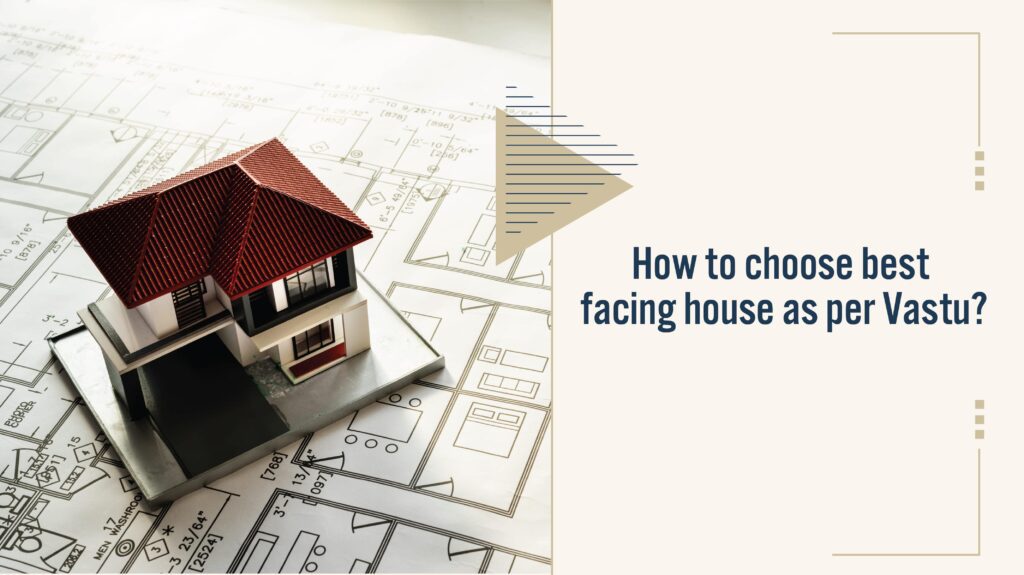
How to Choose the Best Facing House as per Vastu

When it comes to buying or building a home in India, Vastu Shastra is one of the most important considerations. Vastu Shastra, a method that synchronizes architectural design with the energy of nature, has its roots in ancient Indian science. By directing the layout and orientation of a place, its tenets are intended to promote harmony, prosperity, and inhabitants’ well-being.  The direction a house faces is one of the most important Vastu considerations. A household’s general harmony, health, and financial stability can all be greatly impacted by selecting the best house facing as per vastu. Knowing the proper direction based on Vastu can help you make an informed choice, whether you’re choosing a plot, building an independent home, or purchasing a ready-to-move-in apartment. This article by Guru Punvaanii offers a comprehensive guide with expert-backed vastu tips for houses and practical ideas on how to choose the best-facing home based on Vastu principles.  Understanding the Concept of House Facing in Vastu  It’s crucial to comprehend what “house facing” in Vastu actually implies before deciding which direction is ideal. A common misconception is that the face of the house is determined by the direction of the main door. The direction one faces when exiting the main door is the true facing direction of the home. A house is said to be east-looking if, for instance, you stand at the main door facing east.  This distinction is important because the direction of facing affects the cosmic influence and the flow of energy. What’s the first step in assessing how to know the direction of the house? Which direction should a house face? Let’s investigate more.  How to Know the Direction of a House  If you have the correct tools, figuring out the facing direction is easy. Here’s how to accomplish it:  Face out from the main entryway as you stand within the house. Use your phone’s compass app or a real compass. Allow the gadget to settle while holding it parallel to the ground. Keep in mind that the home is facing the direction you are facing. Pro tip: To prevent variation, take measurements in the daytime and avoid magnetic things, such as steel grills. After learning how to know the direction of the house, let’s examine which direction is optimal based on Vastu.  Which is the best house facing as per Vastu?  Each direction has a distinct meaning in Vastu. Although there isn’t a single solution that works for everyone, the following lists the most popular paths:  North-facing house Perfect for finance experts and business professionals  Brings wealth and a consistent income.  Equilibrium in the flow of energy  East-facing house Linked to fresh starts and the rising light.  Brings recognition, development, and renown  Great for those in leadership or government positions  West-facing house Less desirable but appropriate for academics, researchers, and teachers  provides both stability and innovative energy.  Must be matched with appropriate Vastu treatments.  South-facing house Because of its links with Yama (the god of death), it has always been avoided.  However, corrections might turn positive.  advantageous to those involved in politics or real estate  According to Vastu, which house faces best? Most people agree that homes facing north or east are the best. But let’s take a closer look at one common orientation: Is a house facing north good or bad?  Is a North-Facing House Good or Bad?  According to Vastu, a house facing the north is typically very lucky. It is associated with prosperity and success and embraces positive energy. However, a few things need to be taken into account: Pros: Perfect for those working in accounting, finance, or business Brings prosperity, health, and peace. Good ventilation and natural light Cons: Incorrect entry or interior design could have the opposite impact.  Must be paired with the right room placement according to Vastu.  Vastu Tips for House Entrance (Main Door)    House entrance as per vastu has a significant impact on how energy flows. Here are some pointers:  The best entrance directions are:  East-facing houses: northeast entrance  North-facing houses: north or northeast entrance  West-facing houses: northwest entrance  South-facing houses: southeast entrance (with treatments)  Steer clear doors that face the kitchen, stairs, or restrooms.  Use lucky symbols, such as Om or the swastika, to decorate.  Room Position as per Vastu  Internal room location is as crucial as direction for a home as the room position as per vastu: Ideal Direction for the Room  North or Northeast Living Room  Southwest Master Bedroom  Children’s Room, Northwest or West  Southeast kitchen (Agni corner)  Toilet/Bathroom Northwest or West  Northeast Room for Pooja  Vastu Remedies for Incorrect House Facing Have you purchased a house that isn’t in the best location? Rest assured, Vastu remedies can help reduce the adverse effects:  Place crystals or Vastu pyramids next to the main entrance.  Use earthy or neutral paint colors for the main entryway area.  To deflect negative energy, place a mirror on the wall across from the entryway.  Maintain a tidy and well-lit main entrance at all times.  Seek advice from a Vastu specialist for tailored remedies.  Key Vastu Tips for House Selection Essential vastu tips for a house are: Make sure the entrance orientation complies with Vastu principles.  Steer clear plots with strange shapes or long corners.  Verify the locations of the rooms before deciding.  Look for adequate ventilation and natural light.  Steer clear of residences with restrooms in the northeast or stairways in the middle.  You may welcome health, wealth, and pleasure into your new home by using these Vastu house selection suggestions.  Conclusion Choosing the best house facing as per Vastu is more than just tradition—it’s about inviting positive energy and balance into your life. A home built or chosen with Vastu in mind can uplift every aspect of your well-being from mental peace to financial success.  Any facing can be enhanced with careful planning and Vastu remedies, even if traditional favourites are the north and east. Recall that Vastu is an age-old science based on harmony with natural forces rather than superstition.  Don’t leave it to chance if you’re not sure if your house complies with Vastu or if you want professional guidance on the best layout and orientation.  Choosing the right house facing can be confusing. Let our team simplify it for you with clear guidance based on Vastu Shastra. We’re here to help

Scroll to Top