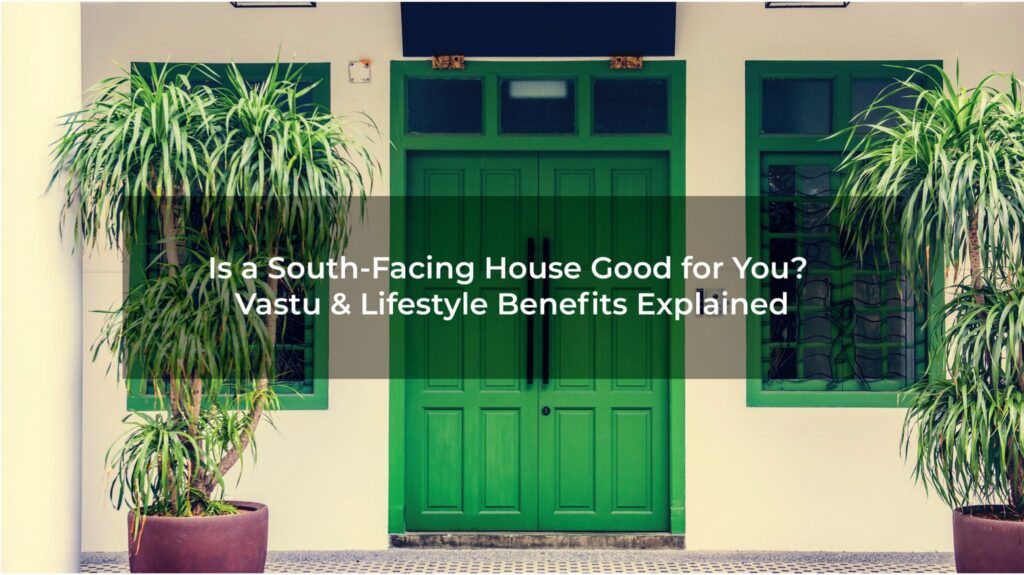
Is a South-Facing House Good for You? Vastu & Lifestyle Benefits Explained
When it comes to buying or building a house in India, one question often comes up and is discussed with family elders or a trusted pandit: “Is a south-facing house good?” The beliefs around the direction a house faces, especially south, have long carried a mixed reputation in the Indian real estate and Vastu landscape. While some say it is a myth, others take it seriously enough to reject a seemingly perfect house. So, is a south-facing house good or bad for you? We will break it down for you with clarity and nuance from both Vastu Shastra and modern living perspectives. What Does “South Facing” Mean? First, let’s get the basics right! A south-facing house means that when you step out of your main entrance, you face the south. This does not mean that the entire structure or every room is tilted southwards, but rather it’s just about the placement of the entrance. This placement in Vastu is considered important, as it is believed this is where energy enters the home and hence should only be placed in a way that brings in positivity. The Stigma Around South-Facing Homes Now, as per the Vastu Shastra, the directions carry symbolic meanings: North is associated with wealth, as it is linked to Kubera, who is the god of riches. The East is tied to health and social connections, signifying the sunrise or new beginnings. The West is more neutral or spiritual. South, however, is often linked with Yama, who is the god of death. This association and symbolism have led to generations of people avoiding south-facing homes, fearing that such homes will bring negativity to misfortune. However, this is a misunderstood interpretation of Vastu. The truth is that Vastu Shastra was never anti-South. It always spoke about balance, energy flow, and appropriate design. Yes! It is not blind with directional preference; when designed perfectly, the south homes can be among the most stable, prosperous, and secure living spaces. That’s exactly what we will be discussing ahead! The Vastu Perspective A south-facing door can be highly auspicious according to Vastu guidelines—but only when the home is thoughtfully planned and designed following the right principles, just like with any other direction. Here are some key factors to consider: 1. Main door placement This is one of the most crucial aspects of a south-facing house! Vastu recommends placing the main door in the center or to the southeast part of the south wall, but never in the southwest. This is because the southwest zone is considered the zone of stability, and any door here is believed to destabilize the energy within. Ideal entrance zones: 3rd or 4th pada (segment) from the southeast corner Avoid: 1st and 2nd padas, or anywhere in the southwest. 2. Room placement for harmony Every room in your house has an ideal direction placement, and here is how it plays out for a south-facing home: Room Ideal Direction in a South-Facing Home Master Bedroom Southwest (Adds Stability) Kitchen Southwest (The “Agni” Or Fire Corner) Living Room Northeast or Northwest Bathroom / Toilet West or Northwest Pooja Room Northeast (Most Sacred Zone) 3. Slope and elevation In a south-facing plot: The north or northeast should ideally be lower than the south. The south and southwest corners should be heavier or higher (e.g., elevated platforms, storage and solid walls). 4. Sunlight and heat There is no doubt that south-facing homes receive maximum sunlight during the day, especially in tropical countries like India. This abundance of sunlight is a benefit in colder regions or homes that are well-insulated. However, this may hit its peak humidity during summers, so you will have to incorporate thermal insulation, shaded verandas, or thick drapes. But if we look at it from a sustainability point of view, then sun exposure means less artificial lighting. 5. Positive zones of wealth and career Contrary to popular belief, many successful people, including business owners, celebrities, and professionals, live in south-facing houses. As per Vastu, the south is ruled by Mars (Mangal), which is called the planet of strength, courage, and determination. Also Read: 10 Things You Should Check Before Buying a Plot in Bangalore Benefits Of South-Facing Houses Vastu aside, if we talk about the modern-day lifestyle, does living in a south-facing home feel any different? Well, we will tell you the benefits so you can decide for yourself: 1. Ample natural light One of the biggest lifestyle advantages of a south-facing home is the abundance of natural light that pours into the house throughout the day. This is particularly common in areas like the living room, dining area, and sometimes even bedrooms. It is because the sun moves from east to west and remains slightly southward in the sky, hence the pleasant aesthetic you get. Also, brighter homes tend to feel more inviting, open, and positive. 2. Low electricity bills These homes often consume less energy because they interact with natural light and warmth. Especially in colder months, the home stays warmer naturally due to the sun’s rays entering through the windows or glass doors. This not only helps you bring down the heating costs but also the overall energy consumption. 3. Ideal for solar panels From an eco-architecture or green building point of view, a south-facing roof is the gold standard for solar panel installation! It is because the sun arcs slightly towards the south throughout the day; south-facing rooftops receive the most direct sunlight over a longer duration compared to east or west-facing roofs. This way, solar panels can generate maximum power output, giving you an edge in harnessing solar potential. 4. Good for gardening If you are into home gardening, a south-facing house can feel like a blessing. How? Well, a south-facing balcony, terrace, or garden typically receives the most continuous sunlight, anywhere between 6 to 10 hours. Although that does depend a lot on the season. But generally, this level of exposure is ideal for sun-loving plants like tomatoes, chilies, okra, roses, marigolds, and most herbs. Also, south-facing gardens dry up quicker after rain, which can help to prevent root rot and fungal growth. For example, in Ekadanta by Gurupunvaanii, they’ve planted trees like sandalwood, red sandalwood, mahogany, teak, and around 15 types of fruit trees. It’s perfect