Guru Punvaanii

Property Buying Guide

Build Your Tranquil Abode
Property Buying Guide

Build Your Dream Home with Care and Planning

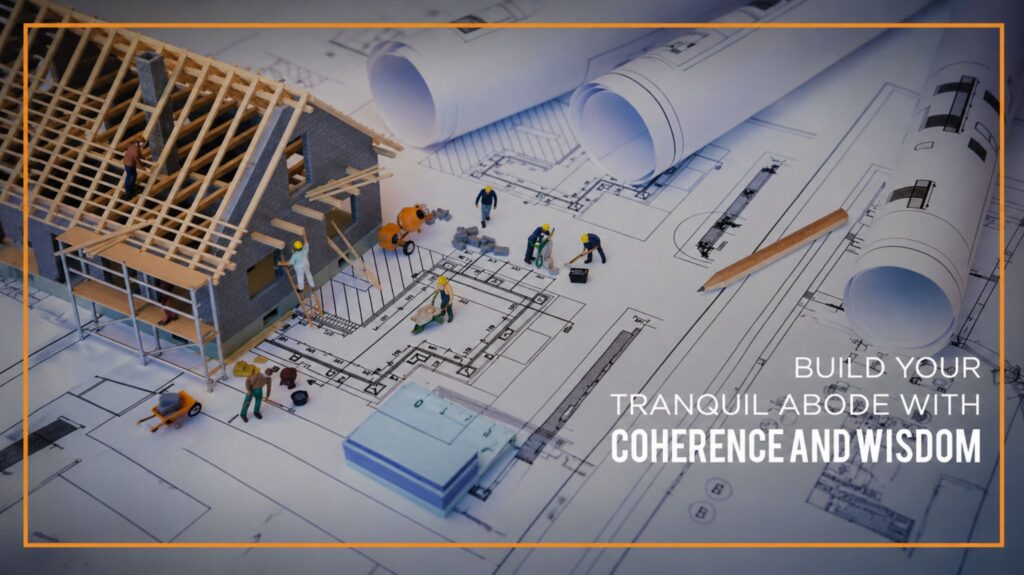
The decision to build your own serene abode brings about a roller coaster of emotions and certainly requires you to dip into your savings at times. So, it doesn’t come as a bolt from the blue that your home is one of the most valuable, memorable and significant assets of your life. Right from weighing the pros and cons of every single step you take and preparing inceptive plans to bringing to life what you envision, making a magnificent structure stand strong is a teamwork of many creative and judicious minds.  Hence, to bring the left and right sides of your brain to a perfect balance, the following is an attempt to broaden your mind about the various factors to consider while you decide on building your humble abode as you begin to tread along this crucial venture. Why Planning Matters Before Building Your Home Begin your journey by probing into financial options. Your source of finance for constructing your home may be your savings or home loans. Regardless, cogitating on your source of finance before the beginning of construction will result in a steady flow of the rest of the process. Even though production costs of building materials have come down, do keep in mind that fluctuations are frequent and most construction materials, like cement and paint, will lose their potency within 6 months.  Choosing the Right Location for Your Dream Home Turn over a new leaf with the right location and facilities. It’s not uncommon to reiterate on choosing a comfortable location with the best vicinity and delve more into the water, drainage and electrical facilities in your area. You also want to make sure that your area doesn’t turn out to be a mosquito breeding hotspot. As we give utmost importance to the vastu of the place we live in, don’t let this factor slip off your mind amidst the wide pool of factors you need to consider. Besides this, be cognizant about the legalities of the location by scrutinizing the regulations, development plans, permits, development restrictions, code restrictions, zoning and most importantly, the soil type.  Selecting the Right Contractor for Your Project The right contractor is certainly the big cheese of making your house stand strong. Always remind yourself to ruminate deeply before choosing your contractor. Here are some questions you need to consider:  1) Do they have enough experience in the field and are they registered with a reliable license?  2) Do they hold a remarkable reputation in the field?  3) Do they adhere to timely services and are kind enough to resolve any issues?  Once you find your answers for the above, do remember to sign a contract between you and your contractor to avoid getting into dire straits in case of any future issues and save any information as proof for your dealings. Designing a Home That Reflects Your Vision Your inceptive plan is the key to open doors to an enchanting abode. Creating a plan is one of the crucial steps that requires utmost time and dedication, as it’s not just about sitting with the right professionals and creating a beguiling design, but it’s also about creating a secure and comfortable abode for you and your family. Guru Punvaanii recommends learning more about your architect and planning your budget carefully while holding onto a reserve for unexpected expenses. Getting the drift of all the necessary documents makes this journey a cakewalk. It is crucial to consider all the documents you require to escape the red tape of the bureaucracy. Let’s consider an instance where you want to construct a building taller than 15 meters; then you need to seek permission from the fire department. Besides this, don’t forget to seek approval from the BBMP (Bruhat Bangalore Mahanagar Palike), Bangalore Electricity Company (BESCOM) and Bangalore Water Sewerage and Sanitary Board (BWSSB) before beginning the construction of your new abode. Turning Your Dream Home into Reality Making your dream a reality brings about a medley of constant consternation and careful action. Yet, if you let loose the consternation and instead focus on being sapient, patient and muse over how every action of yours can lead to the construction of a captivating abode, nothing can stop you from breathing new life into your dreams. Contact us for more details.

Checklist Before Buying a Home in a Gated Community
Property Buying Guide

What to Check Before Buying a Home in a Gated Community in Bangalore

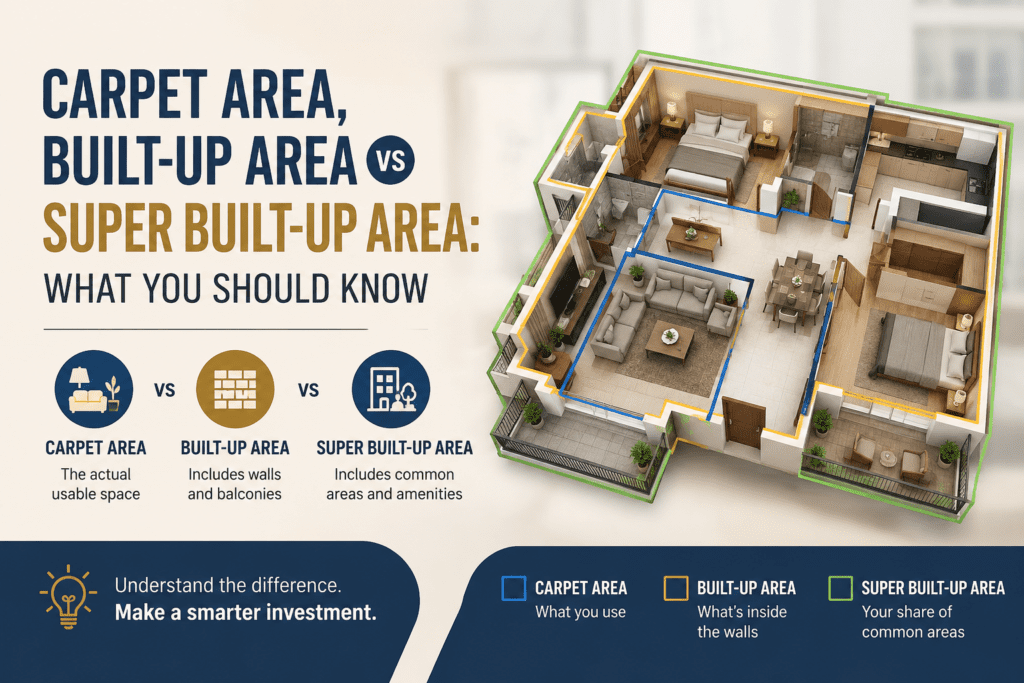
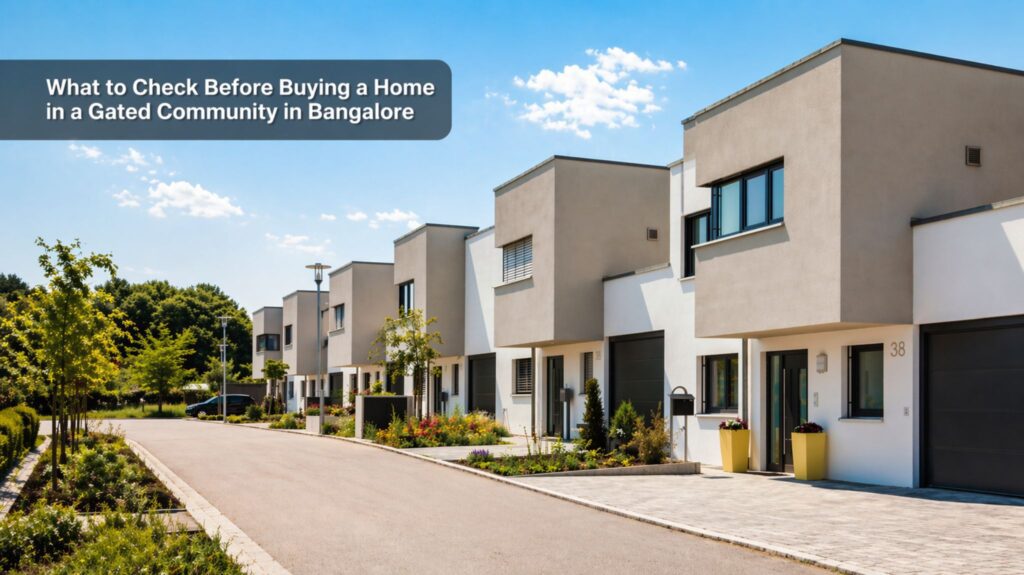
Buying a home in a gated community is not just about having properties—it is about investing in a lifestyle. These communities offer a rare mix of security, convenience and community life that urban owners want. But while the leaflets show the best, real life is about the details. From the builder’s reputation to long-term habitability, you have long been evaluating before signing the agreement.  For families, a gated community offers this perfect balance: a safe recreation area for children, peaceful walking zones such as a park for elders and attentive amenities for working professionals. But how do you separate polished marketing from the real value? Let’s break down everything you should check before you make that decision.   Why Choose a Gated Community in Bangalore? With their growing population, infrastructure development and busy professional lives, buying a property in Bangalore may seem overwhelming. A gated community in Bangalore acts as a sanctuary in all this chaos. These developments offer the following:  24/7 security and CCTV surveillance  Green and landscape environments such as a park, a laughter court and a yoga area  Modern clubs, gymnasiums, pools and more  Strong community life and cultural immersion  Higher appreciation value of the property  Most of these projects are also in high-demand zones that see the best resale value and rent returns over time. For example, some projects by Guru Punvaanii, like Elegance and Shyam Residency, are designed to accommodate the needs of different age groups and offer the typical features expected in a gated community. Which Location Works Best for You? Selecting an ideal location is important, especially in Bangalore, because here traffic can turn short distances into long waiting times and commutes.  North vs South Bangalore—What’s the Difference?   North Bangalore is known for better planning, wide roads, and quick access to the airport. It is the ideal location if you work near Hebbal, Yelahanka, or Manyata Tech Park. South Bangalore is culturally rich and has established areas such as Jayanagar and JP Nagar. South Bangalore is a good deal for families who want serenity and good schools around.  Whichever location you choose, make sure it is well connected to major roads, public transport and daily conveniences.  Are You Close to Work, Schools, & Hospitals? The home might check all boxes on paper, but if it adds hours to your daily commute, it may not be worth it. Check:  The house you are planning to buy might look like the perfect fit for you on paper, but if it adds hours to your daily commute, it may not be worth it. Remember to check:  Distance from your office School options within a 5 to 10 km radius Availability of healthcare facilities close Nearby supermarkets, pharmacies and parks A home is more than just its walls—it’s about how easily your life fits into the neighbourhood. Want the full checklist of what to look for before buying a home in Bangalore? What Type of Property Is Right for You? Villas, Apartments, or Row Houses? Gated communities in Bangalore have everything from compact 1 BHKs to high-end luxury villas. Choose based on your budget and lifestyle.  Villas: More privacy and space, but larger maintenance.  Apartments: Easier to manage, comparatively lower maintenance, but less space.  Row houses: A good middle ground with moderate privacy and shared amenities.  Ready-to-Move vs Under-Construction – What’s Safer?   Ready-to-Move: What you see is what you get. There is no risk of delays. Under Construction: It is comparatively cheaper but riskier as well. Always check RERA registration and construction timelines.   Is the Project Legally Clear? Legal clarity is very important when you’re buying a home in Bangalore, especially in gated communities.  RERA Registration: Mandatory for all new projects. Check out the builder’s RERA number on the official Karnataka RERA website. Khata Certificate: Make sure the property has a valid Khata A or B (preferably Khata A), selling deed, construction plan approval and occupation certificate. A legal consultant can help you examine all documents before any payment is made.  What About Security and Safety Measures? Are there working CCTV cameras in the input, output and common areas?  Is there a 24/7 security system in force?  Does the community use an application-based visitors management system?  Are there fire safety and emergency exit plans?  These are some non-negotiables in any gated community in Bangalore.  Are the Amenities Truly Useful? These amenities make life easier—but only if you really use them.  Prioritize essentials like elevators, power backup, children’s play area, gymnasiums, water supply, and walking or jogging paths. Fancy features like mini theaters for movie screening or meditation pods for wellness may look attractive, but they might not add real value to your daily routine. Make sure there’s an on-site maintenance team for plumbing, electrical work and maintenance of the common area.  What Are the Monthly Maintenance Costs? People often ignore this at first, but it adds up over time. Check thoroughly:  What are the monthly maintenance charges, if any? What services are covered in these charges? Are there any annual increases or hidden charges in this?  Also, check for extra costs like parking charges, clubhouse membership, or one-time lump sum charges for any other amenities.  How Does the Builder’s Reputation Hold Up? Don’t just go by name—do your research properly.  Check past projects: Were they completed and handed over on time without any legal issues?  Read online reviews: Sites like Quora, Reddit, or even Google Reviews can reveal the ground reality.  If possible, visit previous developments and talk to current residents.  What’s the Resale or Rental Potential? Whether you are investing or planning to live in the long run, think about the future.  Is the community in a rapidly developing area?  How is the rental demand in the locality?  Are there in-progress infrastructure projects that can increase the value of the property?  A gated community in Bangalore, with strong perspectives, will always be a better bet.  Have You Seen the Model Flat or the Sample Villa? Never commit without a site visit. Check:  Carpet area vs super built-up area Quality of flooring, doors, fittings, and kitchen setup Natural lighting and ventilation Water supply and waste management systems  If you’re buying remotely, insist on a virtual walkthrough.  Final Checklist Before You Sign  Verify builder’s RERA registration  Check Khata certificate and legal documents  Visit the property location at different times of the day  Talk to current residents if possible  Get a full understanding of all fees and maintenance costs

Under Construction vs Ready to Move Property
Property Buying Guide

Under Construction vs Ready to Move Property Which is Better

While purchasing a home, one of the most prevalent dilemmas for property buyers is deciding between under-construction flats and ready-to-move-in properties. A major factor in decision-making here is the occupancy certificate (OC) status. Properties that lack an OC are levied with Goods and Services Tax (GST), entail waiting for possession, and can have execution risks. Conversely, those with an OC are legally available for occupation, enjoy no GST, and provide instant usability. Therefore, the fundamental question: do you choose under-construction flats with lower entry points and appreciation prospects, or do you take the certainty and convenience of ready-to-move-in apartments?   This article demystifies the costs, taxes, risks, financing, and returns so that you can make an informed choice.  Price and Total Cost of Ownership A key draw of under-construction apartments is their lower base price tag. Developers tend to start projects at reasonable prices, providing early-bird discounts. But the cost of ownership has to account for more than the sticker cost.   For under-construction flats: Base price + 5% GST (or 1% for applicable affordable housing).  Rent + pre-EMI overlap till possession.  Fit-out expenses after the flat is handed over.  For ready-to-move-in flats:  Base price alone (no GST).  Stamp duty and registration fees are paid in both scenarios.  For example: A ₹70 lakh under-construction property might incur an extra ₹3.5 lakh GST. If construction is for three years, you might also pay rent in the meantime, in addition to pre-EMIs. The same-valued ready-to-move flat would avoid GST altogether, and you can save on rent as you can move in straight away. Taxes and GST The regime of GST has established a distinct cost differential between the two types of properties.  Development flats invoke GST at 5% (or 1% for low-cost projects). Crucially, buyers do not have input tax credit on this payment.  Ready-to-move properties with valid OC are exempt from GST. Buyers simply pay stamp duty and registration fees.  Practical advice from Guru Punvaanii: Always ensure the OC has been issued prior to purchase. Also, watch out for other taxable charges such as clubhouse or parking charges, which may still incur GST if charged separately.  Possession Timelines and Certainty With under-construction flats, possession will vary based on the under-construction property.  While contracts provide for a date of handover, due to funding, approval, or labour shortage issues, delays are the norm.  Ready-to-move-in apartments provide assurance. You can visit the actual apartment, verify it for snags, and occupy it as soon as registration is done.  The cost of time cannot be overlooked; rent and EMI overlaps during delays can play havoc with your finances. For most buyers, the comfort of occupancy on day one is more than a premium price tag.  Risk and Legal Safeguards (RLSA Focus) The Real Estate (Regulation and Development) Act (RERA) has enhanced transparency for flats under construction, but there are still risks involved.  Safety measures include:  RERA registration and public disclosure of project information are mandatory.  Delayed possession compensation with interest.  Five-year defect liability after handover.  But as Guru Punvaanii points out, even then buyers must:  Verify builder’s RERA registration page.  Keep allotment letters, payment receipts, and communications.  Read sale agreements carefully for penalty clauses.  For ready-to-move-in apartments, the primary protection is confirming the OC and ensuring that the property is clear of encumbrances.  Financing and Cash Flow Financing is different for both types of properties.  Under-construction apartments typically have a construction-linked payment schedule. EMIs begin as pre-EMIs on the loan that has been disbursed, which can go on for years without the advantage of occupation.   Subvention schemes (when the builder pays the pre-EMIs) can simplify the situation but then have the underhanded risk of trapped money if the construction halts.  Ready-to-move-in apartments need an almost-full upfront payment at acquisition. EMIs begin right away, but because you can take possession or lease the building immediately, cash flow recovers quicker.  Astute buyers ought to compute overall interest expenditure under scenarios to determine which suits their long-term needs.  Customization and Specifications Customization is one often not-given-enough-thought aspect.  Off-the-plan properties do provide some leeway; purchasers can order layout adjustments or finish upgrades during the construction process. That said, changes are circumscribed by builder protocols and involve the threat of “variation clauses.”  Ready-to-move-in flats reveal what you will receive. Options for customization are limited, but the advantage is that you see the actual unit rather than working from brochures or demo flats.  Investment and Returns From an investment standpoint:  Under-construction flats enable entry at a lower cost. As milestones of construction are achieved, value of the property generally increases. Yet, there is greater execution risk—if the project is held up, your capital is trapped.  Ready-to-move-in apartments give immediate rental return and have lower vacancy risk. While capital growth might be sluggish compared to early-stage properties, the guarantee of returns makes them attractive to several investors.  Liquidity too varies; completed units are more easily disposed of, while under-construction apartments are greatly dependent on the mood of the market. Hidden Costs and Due Diligence Apart from base price, the following should also be budgeted for:  Floor rise charges, preferential location charges (PLC), clubhouse fees.  Maintenance deposits, parking charges, society formation costs, and sinking fund contributions.  Due diligence is a must: verify land title, approved building plans, encumbrance certificates, and completion/occupancy certificates. Always visit the site to determine construction quality and neighbourhood infrastructure. Guru Punvaanii stresses that skimping on due diligence will cost buyers much more down the line.  Buyer Checklists For under-construction flats:  RERA registration and transparent timeline.  Payment plan stage-wise and penalty.  Builder’s reputation and litigation history.  Delay compensation details.  GST effect and financial cushion for delays.  For ready-to-move-in apartments:  Check OC and completion certificate.  Check unit for defects and utility preparedness.  Review setup costs and society maintenance fees.  Double-check the clear title and lack of dues.  Conclusion The under-construction vs ready-to-move property—what is better?   Debate has no blanket response. If you are risk-averse, can wait, and are willing to take on some risk for future appreciation, under-construction apartments might suit your needs. If certainty, convenience, and instant use matter most, ready-to-move-in flats obviously triumph. Finally, the choice lies with your investment goals, timeline, and budget. As Guru Punvaanii recommends, do proper due diligence,

Scroll to Top